

Cats are incredibly adaptable and beloved companions all over the world, and people who live in compact urban spaces are no exception to this rule. However, many pet parents worry about whether they are providing enough room for their furry feline friend to truly thrive. If you are wondering about the ethics and logistics of keeping a cat in a small apartment or tiny home, the good news is that square footage is not the most important factor in a cat’s happiness. For felines, the quality of the environment matters far more than the quantity of floor space.
- The Health Risks of Small Living Spaces for Cats
- 6 Expert Solutions for Cat Lovers in Small Homes
- 1. Maximize Vertical Space (The “Cat Superhighway”)
- 2. Create Engaging Window Perches (“Cat TV”)
- 3. Design Cozy Hideaway Spots
- 4. Interactive Toys and the “Hunt-Catch-Kill” Routine
- 5. Pristine Litter Box Management
- 6. Safe Outdoor Adventures (Harness Training)
- Conclusion
- Frequently Asked Questions (FAQ)
- Is a 500-square-foot apartment too small for a cat?
- Can I keep two cats in a small apartment?
- What are the best cat breeds for small apartment living?
- How do I stop my apartment from smelling like a litter box?
- References
Living in a small house or apartment does require intentional planning. A poorly optimized small space can negatively affect a cat’s physical and mental health. Fortunately, with a little creativity and a concept known as “catification,” you can transform even the tiniest studio apartment into a feline paradise. In this comprehensive 2026 guide, we will explore the potential health risks of small spaces and provide actionable, vet-approved solutions to ensure your indoor cat lives a vibrant, fulfilling life.
The Health Risks of Small Living Spaces for Cats
Before implementing solutions, it is vital to understand why small spaces can be challenging for felines. Without active intervention from owners, a tiny environment can trigger several physical and behavioral issues:
- The Obesity Epidemic: The lack of running space can easily lead to a sedentary lifestyle. Without the opportunity for spontaneous, high-energy sprints, calories build up. Feline obesity leads to severe secondary conditions like diabetes, osteoarthritis, and heart disease.
- Boredom and Anxiety: Cats are apex predators with deep-rooted hunting instincts. A small, unchanging environment limits their opportunities for mental stimulation. This chronic boredom frequently manifests as anxiety, over-grooming, or destructive behaviors like scratching furniture.
- Poor Air Circulation: In tiny apartments, poor ventilation can concentrate dust, chemical cleaners, and litter box particles, which can exacerbate feline asthma and respiratory issues.
It is entirely possible to mitigate these risks. By taking proactive steps, you can create an enriching habitat that satisfies all of their biological needs.
6 Expert Solutions for Cat Lovers in Small Homes
1. Maximize Vertical Space (The “Cat Superhighway”)
When you look at your apartment, you probably measure it in square feet. Your cat, however, views territory in three dimensions. In the wild, cats climb trees to survey their territory, escape predators, and feel secure.
The number one solution for keeping a cat in a small apartment is to provide abundant vertical space. You can easily double or triple your cat’s usable territory by building upward.
- Tall Cat Trees: Invest in a floor-to-ceiling cat tree. This allows your cat to climb, stretch, and survey the room from a dominant height.
- Wall Shelves and Cat Walks: Install a series of floating wall shelves staggered like stairs. You can create a “cat superhighway”—a continuous path around the perimeter of your living room that allows your cat to navigate the space without ever touching the floor.
- Top of Furniture: Clear off the top of your bookshelves or wardrobe and place a cozy bed up there. It costs nothing and provides an instant safe haven.
2. Create Engaging Window Perches (“Cat TV”)
Cats are fiercely visual creatures, and a window is essentially their television. Providing them with comfortable access to windows keeps their minds engaged for hours.
You can easily attach a heavy-duty suction-cup window perch directly to the glass, or place a sturdy piece of furniture right below the sill. To maximize the entertainment value, try hanging a bird feeder outside the window or planting a window box with cat-safe flowers to attract butterflies. Just ensure your window screens are securely fastened so your cat cannot push them out when their hunting instincts kick in!
3. Design Cozy Hideaway Spots
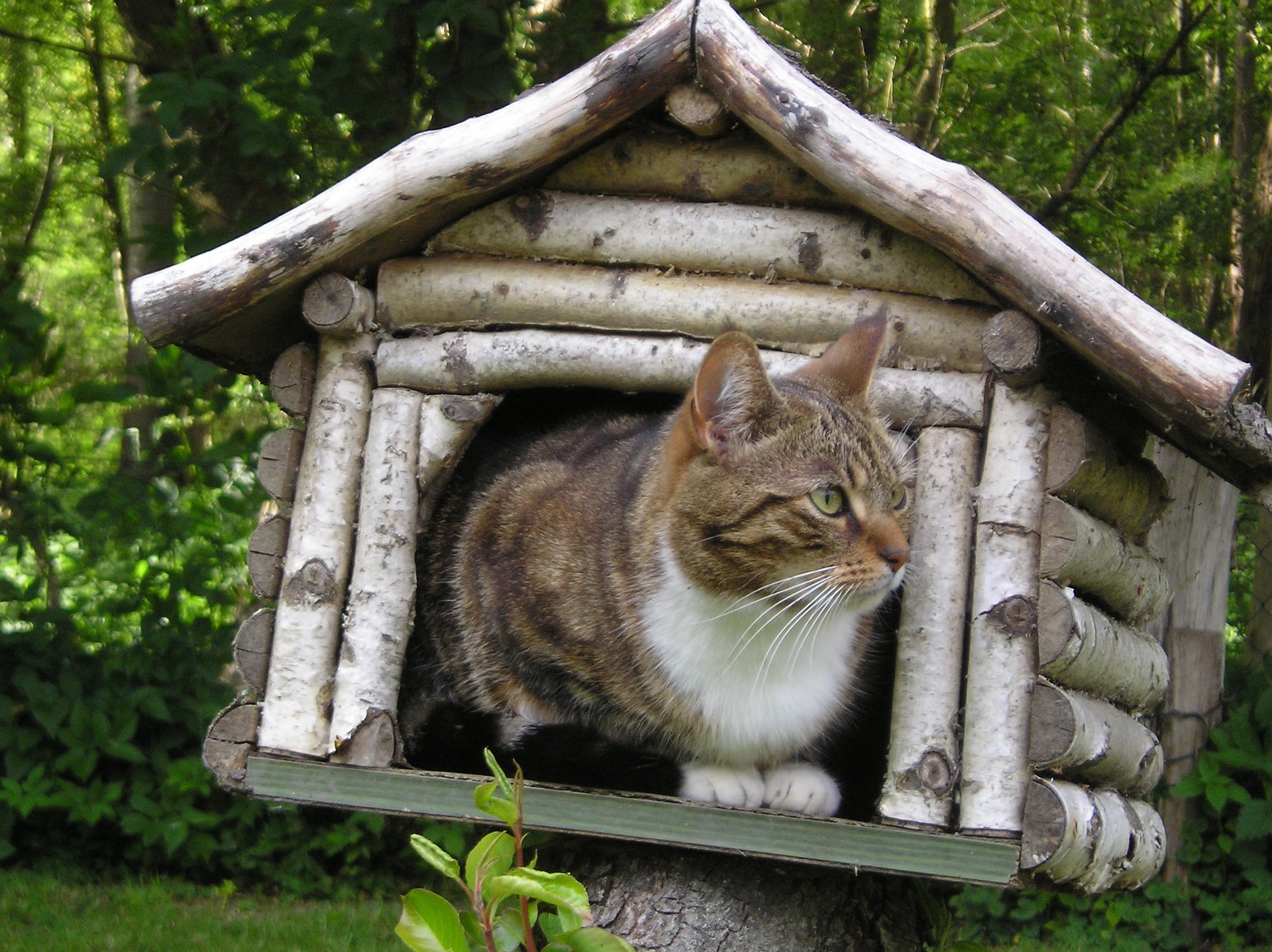
While cats love being up high, they also crave enclosed, dark spaces where they can decompress. Cats use hiding as a primary coping mechanism for stress. In a small apartment where they cannot simply walk into another room to get away from loud noises or guests, dedicated hideaways are essential.
You don’t need expensive equipment for this. A simple cardboard box, a felt cat cave, or a fabric tunnel placed behind a sofa can work wonders. You can also drape a blanket over a chair to create an instant fort. Make sure every room has at least one quiet, secluded spot where your cat knows they will not be disturbed.

4. Interactive Toys and the “Hunt-Catch-Kill” Routine
Because your apartment cat cannot hunt real prey, you must simulate the hunt for them. Interactive toys are non-negotiable for small spaces.
Veterinary behaviorists recommend a daily routine that mimics a cat’s natural biological rhythm: hunt, catch, kill, eat, groom, and sleep.
- Wand Toys: Dedicate 15 minutes twice a day to playing with a feather wand or laser pointer. Make the toy act like real prey—hiding behind furniture and moving unpredictably. Always let your cat “catch” the toy at the end to build their confidence.
- Puzzle Feeders: Ditch the traditional food bowl. Make your cat work for their meals by using food puzzles or snuffle mats. This slows down their eating (preventing obesity) and provides massive mental stimulation.
5. Pristine Litter Box Management
One of the biggest concerns about keeping a cat in a small apartment is the smell. In a tight space, a dirty litter box is impossible to ignore, and a cat forced to use a dirty box will quickly develop inappropriate urination habits out of frustration.
The golden rule of litter boxes is “one per cat, plus one extra.” If you only have space for one box, it must be scooped meticulously—at least once or twice a day. Consider utilizing hidden litter box furniture (like an enclosure that doubles as a side table) to save space. Furthermore, ensure the area has decent ventilation and use a high-quality, dust-free clumping litter to protect both your lungs and your cat’s.
6. Safe Outdoor Adventures (Harness Training)
If your apartment is simply too small to burn off your cat’s energy, consider taking the indoors outside! Many cats can be safely harness and leash trained. Start slowly by letting them wear the harness inside for a few minutes a day, rewarding them with treats. Eventually, you can take them for short walks in quiet, dog-free courtyards or parks, providing them with ultimate environmental enrichment.
Conclusion
Living in a small apartment or tiny home does not mean you are disqualified from having a happy, healthy feline companion. By thinking vertically, prioritizing cleanliness, and committing to daily interactive play, you can easily ensure your cat has everything they need to thrive. With a little creativity and effort, your small home can become a dynamic, comfortable, and deeply welcoming space for both you and your cat.
Frequently Asked Questions (FAQ)
Is a 500-square-foot apartment too small for a cat?
No, a 500-square-foot apartment is perfectly fine for a cat, provided you optimize the space. Cats care more about vertical territory and mental stimulation than square footage. If you provide cat trees, window perches, and dedicated playtime, a cat can live luxuriously in a studio apartment.
Can I keep two cats in a small apartment?
Yes, keeping two cats in a small apartment is possible and sometimes recommended, as they can keep each other company while you are at work. However, you must ensure you have enough resources to prevent territorial disputes. This means having multiple high resting spots, separate food bowls, and ideally two to three litter boxes.
What are the best cat breeds for small apartment living?
While every cat’s personality is unique, generally laid-back, lower-energy breeds adapt best to small spaces. Excellent apartment breeds include the British Shorthair, Ragdoll, Persian, and Russian Blue. Highly energetic breeds like Bengals or Savannah cats usually require much more space and intensive daily exercise to prevent destructive boredom.
How do I stop my apartment from smelling like a litter box?
In a small space, odor control is all about maintenance. Scoop the litter box at least twice a day, completely empty and wash the box with mild soap every two weeks, and use a high-quality carbon filter or air purifier near the box. Avoid heavily scented litters, as these can overwhelm a cat’s sensitive nose in a confined space.
References
- ASPCA. Feline Behavior Guidelines. https://www.aspca.org/pet-care/cat-care/feline-behavior-guidelines
- PetMD. Play Therapy for Cats. https://www.petmd.com/cat/behavior/play-therapy-cats
- American Association of Feline Practitioners (AAFP). Environmental Needs Guidelines. https://catvets.com/guidelines/practice-guidelines/environmental-needs-guidelines
- ASPCA. Teaching Your Cat to Walk on a Leash. https://www.aspca.org/pet-care/cat-care/teaching-your-cat-walk-leash