
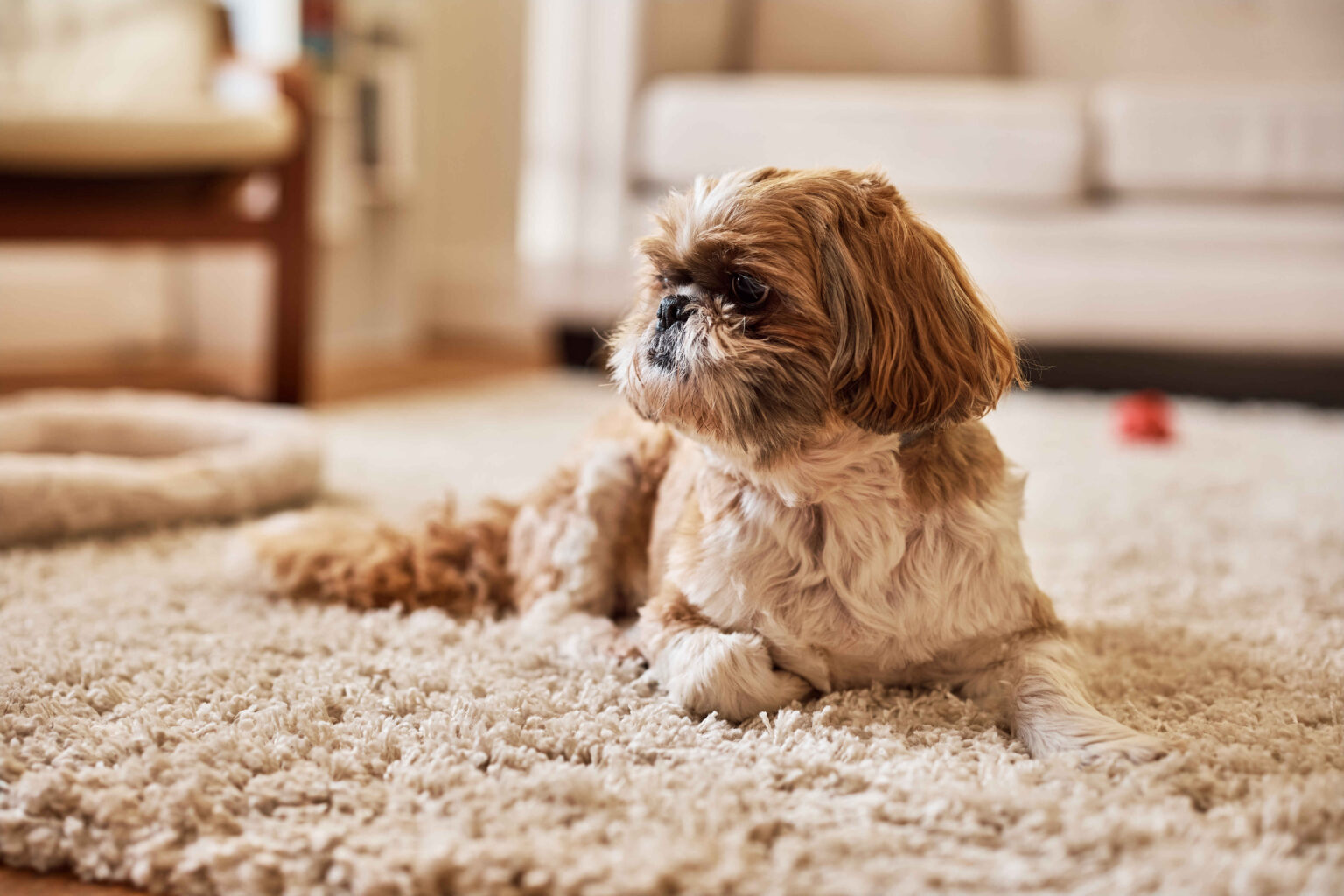
Dogs bring immeasurable joy into our lives. But let’s face the messy truth. They also bring in a lot of dirt. Muddy paws, shedding fur, and bathroom accidents happen constantly. These daily messes often force dog owners to rip out their cozy carpets. Many people replace soft floors with cold, hard tiles or wood.
- Why Hard Floors Are Not Always Better
- 1. Choose Cut-Pile Instead of Loop-Pile
- 2. Opt for a Low Pile Height
- 3. Prioritize Frieze Carpets (Tight Weaves)
- 4. Pick the Right Material: Triexta vs. Nylon
- 5. Rethink Your Colors: Go for Flecked Mid-Tones
- 6. The Secret Weapon: Moisture-Barrier Padding
- 7. Read the Fine Print on Pet Warranties
- Essential Maintenance for Dog-Friendly Carpets
- Conclusion
- Frequently Asked Questions (FAQ)
- What is the absolute best carpet material for dogs?
- How do I get old dog urine smells entirely out of my carpet?
- Are Berber carpets a good idea for dogs?
- Will a home carpet shampooer ruin the stain resistance of my carpet?
- References
You don’t have to give up a soft floor to keep your home clean. You can still keep your space cozy, warm, and smelling fresh, you just need to choose the best carpet for dogs. The perfect floor fights stains, handles heavy paws, and resists odors. This guide will show you exactly how to pick the right flooring. We will share seven expert tips to help you make a smart, dog-friendly choice.
Why Hard Floors Are Not Always Better
Hardwood and tile floors look beautiful. Many people think they are the only option for pets. This is simply not true. Wood floors are actually very slippery for animals. Dogs have soft fur between their paw pads. This fur acts like a fuzzy sock on a slick wood floor. Dogs slide, scramble, and fall easily when running to the door.
Young puppies can injure their growing joints on slick surfaces. Senior dogs face even bigger problems. Older dogs lose muscle mass as they age. They need a firm grip to stand up after a nap. Slippery floors make standing painful and scary for them. Carpeting gives dogs the traction they desperately need. It helps them feel safe walking around your house. You just need to pick the right kind of carpet.
1. Choose Cut-Pile Instead of Loop-Pile
First, let’s talk about how factories make carpets. You will see two main styles in stores: cut-pile and loop-pile. Loop-pile carpets are often called Berber. Avoid Berber carpets completely if you own dogs.
Manufacturers weave yarn in and out of the backing to create continuous loops. These loops look nice and tidy. Sadly, they act as traps for dog claws. Dogs cannot pull their nails in like cats do. Their claws stay out all the time. A claw can easily snag on a loop while your dog plays. A heavy dog can rip an entire row of yarn out in one second. We call this frustrating damage “zippering.”
Look for cut-pile carpets instead. Factories shear off the tops of the loops to make cut-pile floors. This leaves individual strands pointing straight up. Your dog’s claws have absolutely nothing to snag. This simple design choice saves your floors and protects their paws from injury.
2. Opt for a Low Pile Height
Pile height refers to how tall the carpet fibers stand. Deep, fluffy shag carpets feel amazing on your bare feet. However, they are terrible for dog owners to maintain.
Tall fibers grab outdoor dirt, dead skin, and shed fur. A normal household vacuum cannot pull that heavy mess out. Furthermore, long fibers soak up dog pee much faster than short ones. The liquid travels deep into the base before you can even grab a towel. The mess becomes impossible to clean completely.
Choose a low-pile carpet for your living spaces. The short, smooth surface keeps dog hair sitting on top. You can easily suck up the mess with a quick daily vacuuming session. Short fibers also give older dogs a much better grip. Dogs sink too far into thick shag. A firm, low-pile carpet helps them walk with total confidence.
3. Prioritize Frieze Carpets (Tight Weaves)
Short fibers are a great start. Tightly twisted fibers are even better. Carpet makers use intense heat to twist strands of yarn together. A tighter twist makes the flooring much stronger.
Frieze carpets feature a very tight twist. They bounce back quickly when heavy dogs run across the room. The dense packing also creates a solid wall against everyday spills. Think about a muddy paw print or a sudden puppy puddle.
Tightly packed fibers hold the liquid on the top layer for a few minutes. You get extra time to run to the kitchen and grab paper towels. The mess stays on top instead of soaking down into the pad. This buys you time to prevent a permanent stain.
4. Pick the Right Material: Triexta vs. Nylon
The core material matters more than anything else. Wool looks beautiful and feels incredibly soft. But wool acts exactly like a giant sponge. It soaks up dog pee rapidly. It holds that terrible ammonia smell forever. You must choose a synthetic material for a dog-friendly home.
- Nylon: For a long time, nylon was the top choice. Nylon resists crushing well. It handles active dogs running around daily. Yet, nylon soaks up liquids easily on its own. Factories must add chemical stain guards to protect it. Sadly, those cleaning chemicals wear off over time.
- Triexta (Sorona): Today, Triexta is the absolute best option for dog homes. You might see stores sell it under the premium brand name SmartStrand. Triexta naturally pushes water away. Liquids cannot chemically bond with the fibers. You can clean up dried dog vomit or mud with just warm water. The stain resistance never washes away because it lives inside the fiber itself.
5. Rethink Your Colors: Go for Flecked Mid-Tones
People often tell pet owners to buy dark carpets to hide dirt. That is actually bad design advice. A dark brown carpet hides mud perfectly. But it highlights every single piece of light-colored dog hair. On the other hand, a white carpet hides light hair but shows every muddy footprint.
You need to find a smart middle ground. Pick a multi-tonal, flecked, or heathered carpet. These styles blend two or three colors together in one strand. Think about a speckled grey or a textured oatmeal color.
This clever design tricks the human eye. It hides both dark dirt and light fur between your vacuuming days. Here is a great pro tip. Try to match the carpet to your dog’s primary fur color. A golden-beige carpet works wonders for Golden Retriever parents!
6. The Secret Weapon: Moisture-Barrier Padding
Most buyers only look at the top layer of the floor. They completely ignore what goes underneath the rug. The padding is actually your most important weapon against bad odors.
Gravity pulls liquid down immediately when a dog pees. A cheap sponge pad acts just like a kitchen sponge. It sucks up the dog urine right away. The pee hits the wooden subfloor and stays trapped there. Bacteria grows very quickly in the dark. A terrible smell takes over your house on warm, humid days.
Surface cleaning will not fix this deep problem. You must ask your installer for a moisture-barrier pad. People also call this a pet-proof spill pad. This special padding has a waterproof plastic layer on top. It blocks liquids from reaching the sponge layer entirely. The pee stays in the top carpet fibers. You can easily clean it up with a wet vacuum.
7. Read the Fine Print on Pet Warranties
Carpet warranties look boring and confusing. Do not skip reading them! A good warranty saves you major money down the road. Standard warranties often reject claims for “biological stains.” That phrase is just a fancy industry way to say dog pee, vomit, or blood.
You need a carpet with an explicit “All Pet Warranty.” Premium brands offer this special guarantee to buyers. They promise the floor will fight off stains from all domestic pets. This protection specifically includes urine and vomit.
These specialized warranties usually last 10 to 25 years. You get ultimate peace of mind. You know your big flooring investment is totally safe from dog damage.
Essential Maintenance for Dog-Friendly Carpets
Even the toughest floors need regular care. You must maintain your new carpet to keep it smelling fresh. For official advice on caring for your soft floors, check out the Carpet and Rug Institute (CRI) guidelines. Follow these three simple rules for success.
First, buy a high-quality vacuum. Look for a machine designed specifically for pet homes. It needs a true HEPA filter to catch dog dander. You should vacuum high-traffic areas at least twice a week.
Second, trim your dog’s nails often. Long nails tear up soft fibers very quickly. Clip or grind them every three to four weeks. If you hear your dog’s nails clicking on the kitchen floor, they are definitely too long.
Third, use the right cleaning solutions. Never use bleach or hot steam on dog pee. High heat bakes the smell permanently into the floor. Instead, follow expert advice from the American Kennel Club and buy a good enzymatic cleaner. Live enzymes literally eat the odor-causing uric acid crystals. This destroys the smell completely. Your dog will not smell the spot and pee there again.
Conclusion
Finding the right floor takes a little extra research. But you do not have to settle for cold tiles. You can have a warm, beautiful home that handles dog life perfectly. Remember to avoid loop-pile designs completely. Pick short, tight synthetic fibers like Triexta. Choose a speckled mid-tone color to hide daily fur. Always pay extra for the waterproof padding underneath.
These simple choices build a strong defense against dog messes. You can finally stop worrying about every spill or muddy paw print. Relax and enjoy the wonderful, messy life with your favorite canine friend.
Frequently Asked Questions (FAQ)
What is the absolute best carpet material for dogs?
Triexta is the clear winner for dog owners today. Many stores sell it under the premium brand name SmartStrand. It feels very soft on your feet. It also handles running dogs easily. Most importantly, it pushes liquids away naturally. Dog pee and mud cannot soak into the yarn. This makes it incredibly easy to clean.
How do I get old dog urine smells entirely out of my carpet?
Standard soap does not work on old dog pee. You need a dedicated enzymatic cleaner. Enzymes literally eat the smelly uric acid crystals hiding in the rug. Soak the smelly spot heavily with the cleaner. Let it sit wet for 20 full minutes. Then, suck the liquid up with a wet vacuum. You might need to replace the padding if the smell stays.
Are Berber carpets a good idea for dogs?
No. We strongly tell dog owners to avoid Berber floors. These carpets use continuous loops of yarn. A dog’s nail can easily catch a loop during play. The dog pulls its foot back and rips the carpet. You end up with a long, ugly run in your floor. Always buy a cut-pile style instead.
Will a home carpet shampooer ruin the stain resistance of my carpet?
That depends entirely on the material. Hot water and harsh chemicals can strip the protection off nylon carpets. Always use gentle, manufacturer-approved soaps on nylon. Triexta is much safer to clean. The stain-fighting power lives inside the fiber itself. You cannot wash it away with a home shampoo machine.
References
- The Carpet and Rug Institute (CRI). Carpet Care & Pets. Carpet-Rug.org
- Mohawk Flooring. SmartStrand Pet-Friendly Carpet Guide. MohawkFlooring.com
- American Kennel Club (AKC). How to Remove Dog Urine Smell and Stains. AKC.org