

Pet parenting can be as chaotic as it is fun, especially around the holidays. Between the bustling energy of the season, visiting relatives, and preparing large meals, the holidays can be a sensory overload. Add the stress of hosting, and many well-meaning pet parents end up accidentally overlooking Fido or Fluffy in favor of basting a turkey or wrapping gifts.
- 1. Keep Toxic Holiday Plants and Goodies Out of Reach
- 2. Decorate Wisely to Prevent Hidden Hazards
- 3. Mind Your Pet’s Manners and Manage Holiday Stress
- 4. Get the Right Travel Gear for Holiday Trips
- 5. Give Back With Safe, Thoughtful Pet Gifts
- Conclusion
- Frequently Asked Questions (FAQ)
- Can I give my dog a turkey bone as a holiday treat?
- Why is tinsel dangerous for cats?
- How can I calm my dog during a noisy holiday party?
- References
The holiday season is historically one of the busiest times of the year for emergency veterinary clinics. From ingested ornaments to party anxiety, the sudden changes in your home can pose serious risks. To ensure your furry family members stay happy and healthy, Pets and Paws has put together a foundational guide of expert holiday pet safety tips. Keep these strategies in mind to keep your pet safe, and use this guide as a starting point to pet-proof your home for the season.
1. Keep Toxic Holiday Plants and Goodies Out of Reach
Food and festive flora are the centerpieces of any holiday celebration, but they are also the most common culprits of pet illness. You may want to knowvWhat Dogs Cannot Eat: Guide to Toxic Foods and Substances.
Dangerous Holiday Plants
Many traditional holiday plants are toxic to domestic animals. According to the ASPCA Animal Poison Control Center, you should be vigilant about what you bring indoors.
- Mistletoe and Holly: If ingested, these can cause gastrointestinal upset, drops in blood pressure, and cardiovascular issues.
- Poinsettias: While their toxicity is sometimes exaggerated, the milky sap of poinsettia leaves is irritating and can cause drooling, vomiting, and diarrhea.
- Lilies: If you receive a holiday bouquet, check for lilies immediately. True lilies are incredibly dangerous to cats; swallowing a tiny amount of pollen or drinking the vase water can cause severe kidney damage.
Toxic Festive Foods
It is tempting to share your feast, but refrain from feeding specific holiday treats to your pets.
- Fruitcake and Baked Goods: Grapes, raisins, and currants are toxic to dogs and can cause kidney issues. Sugar-free baked goods often contain Xylitol (Birch Sugar), an artificial sweetener that causes a dangerous drop in a dog’s blood sugar.
- Bones and Fatty Scraps: Do not give your dog the leftover turkey carcass or the fatty skin. Cooked bones splinter easily, which can cause internal punctures or bowel obstructions. High-fat foods like gravy and butter frequently trigger Pancreatitis, a painful inflammatory condition.
- Chocolate: Theobromine, found in baking chocolate and dark chocolate, is toxic to pets and can cause tremors and heart arrhythmias.
2. Decorate Wisely to Prevent Hidden Hazards
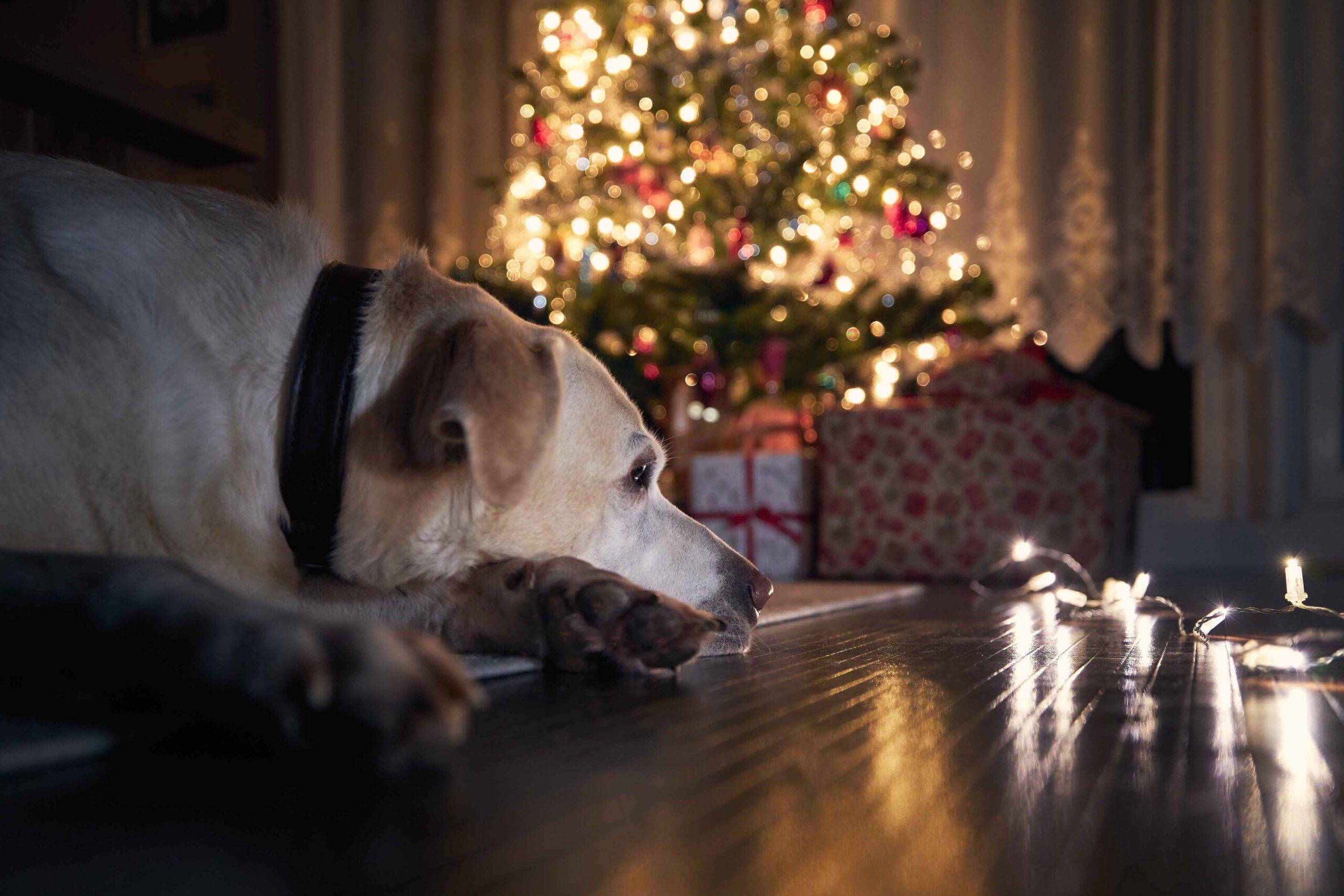

Holiday decor transforms a home, but to a dog or cat, it looks like a new playground. Taking a few precautions can prevent common accidents.
The Holiday Tree
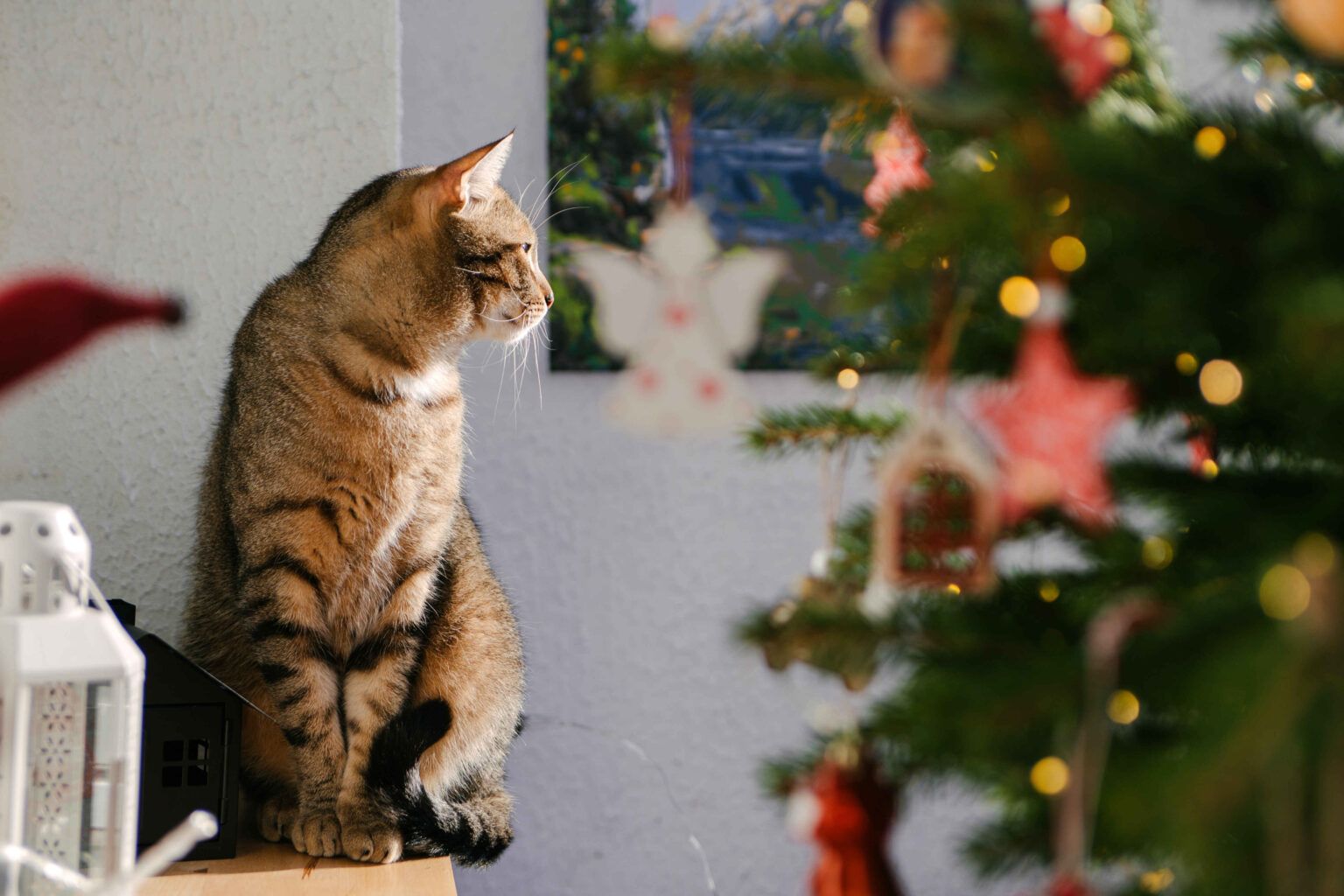
If you have a fresh tree, place it in a discreet corner and make sure it is anchored to the wall so a climbing cat or a clumsy dog cannot pull it down. Additionally, the water in the tree stand can harbor bacteria and fertilizers; use a tree skirt or foil to cover the water basin so your pet cannot drink from it.
Ornaments and Tinsel
Keep delicate glass ornaments and anything edible (like popcorn strands) off the lower branches. A shattered glass ornament can easily cut a pet’s paws.
If you own a cat, avoid using tinsel. Cats are naturally drawn to the shiny, stringy material. If swallowed, tinsel can cause a “linear foreign body,” where the string wraps around the intestines, requiring emergency veterinary surgery to resolve.
Electrical Cords and Candles
Holiday lights mean extra electrical cords running across your floors, which are major chewing hazards. Deter your pet from cords by tucking them tightly against baseboards or spraying them with a pet-safe bitter apple spray. Finally, never leave lit candles unattended; a wagging tail can quickly knock a candle over and start an accidental fire.
3. Mind Your Pet’s Manners and Manage Holiday Stress
Heightened activity at home, loud music, and a steady stream of strangers can affect your pet’s behavior. Even a social dog can become overwhelmed, and a calm cat may look for a place to hide.
Create a “Safe Haven” Zen Room
If your pet is prone to excitement or anxiety, set aside a quiet, secure room in the back of the house before the party begins. Equip this room with their favorite bed, fresh water, puzzle toys, and treats. Turn on a television or play soft music to drown out the noise of the party. Lock the door and place a sign on it asking guests not to enter.
Prevent Door-Dashing
With guests coming and going, the risk of your pet slipping out the front door increases. Ensure your pet’s microchip information is up to date and that they are wearing a collar with visible ID tags before the holiday season kicks off.
4. Get the Right Travel Gear for Holiday Trips
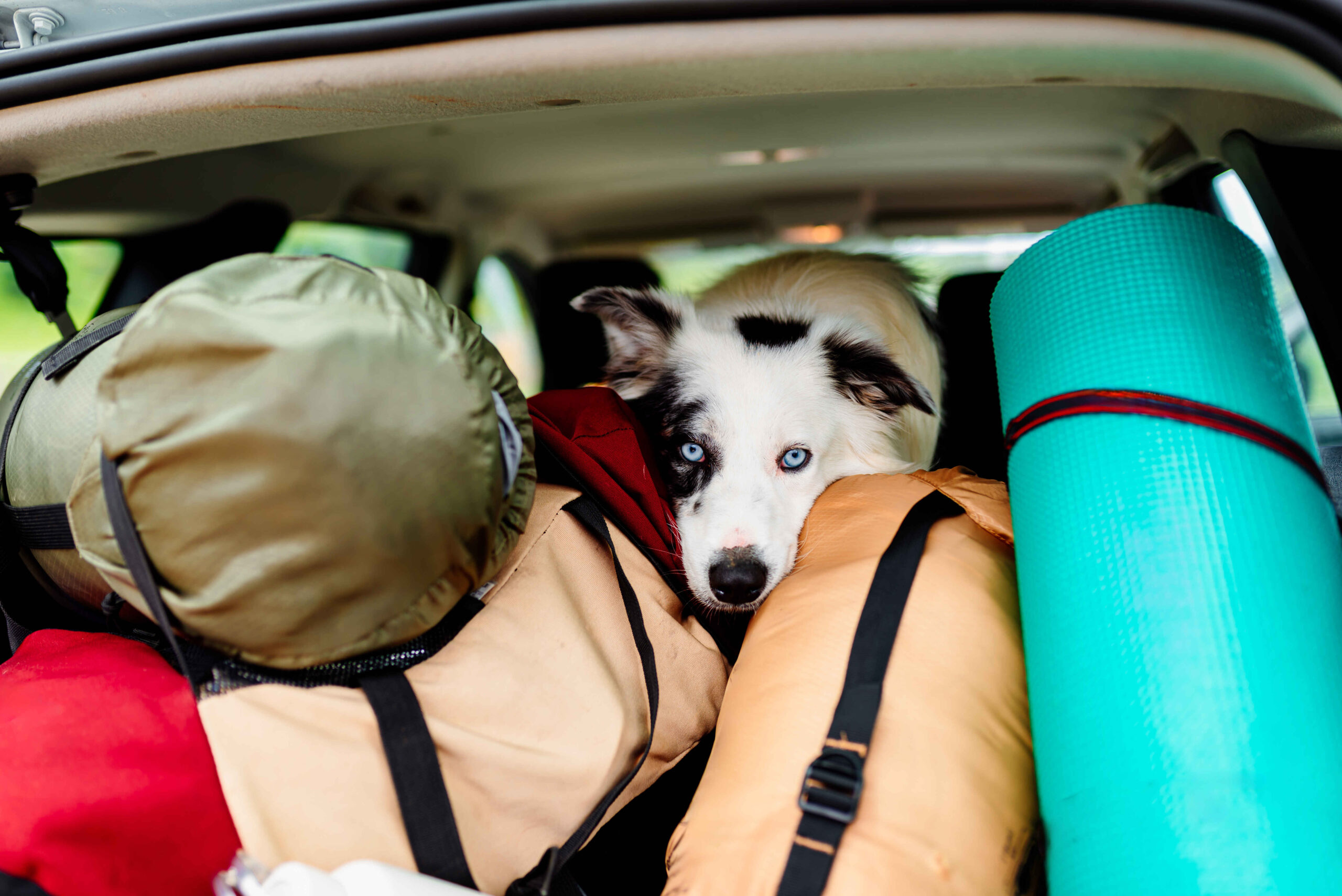

If your holiday plans involve hitting the road or flying, preparation is key. As advised by the American Veterinary Medical Association (AVMA), traveling safely with a pet requires the right gear.
If you are driving, your pet should be safely restrained in a crash-tested crate or a pet seatbelt harness to prevent them from distracting the driver. If flying, be certain to use an airline-approved, hard-sided shipping crate. Airlines are strict during the holiday rush, so confirming crate requirements ahead of time is crucial. Always travel with physical copies of their updated health records and rabies certificates.
5. Give Back With Safe, Thoughtful Pet Gifts
Our pets are family, and we naturally want to include them in the gift-giving! When selecting toys, ensure they are safe. Avoid toys with small, easily swallowed pieces, and stay away from rawhide, which can be difficult to digest and poses a choking hazard.
Consider gifting an experience or a comfort upgrade. Older, arthritic pets may appreciate an orthopedic memory foam bed. You could also book a professional grooming session, or invest in durable, interactive puzzle toys that will keep them mentally stimulated while you entertain guests.
Conclusion
The holiday season is meant to be a time of joy and celebration. By keeping these foundational holiday pet safety tips top of mind, you can actively protect your furry best friend from the common dangers of seasonal foods, decorations, and stress. A little bit of proactive planning goes a long way in ensuring that your entire family, both two-legged and four-legged, enjoys a happy and healthy holiday.
Frequently Asked Questions (FAQ)
Can I give my dog a turkey bone as a holiday treat?
No. You should avoid giving dogs cooked poultry bones. When bird bones are cooked, they become brittle and can splinter into sharp shards. This can puncture the digestive tract or cause a bowel obstruction. It is best to dispose of the turkey carcass securely in a trash can your dog cannot access.
Why is tinsel dangerous for cats?
Cats are attracted to the shiny, stringy nature of tinsel. However, their tongues have backward-facing barbs, making it difficult for them to spit out string once it is in their mouth. If swallowed, tinsel does not digest and can anchor itself in the stomach while trailing into the intestines, causing a serious medical issue that requires surgery.
How can I calm my dog during a noisy holiday party?
The best strategy is to prevent the anxiety before the party peaks. Create a designated quiet room with their bed, water, and puzzle toys away from the guests. You can also ask your veterinarian about over-the-counter calming aids, such as pheromone diffusers, calming chews, or specialized anxiety wraps to help them feel secure.
References
- ASPCA Animal Poison Control. Toxic and Non-Toxic Plants. ASPCA.org
- American Veterinary Medical Association (AVMA). Holiday Pet Safety. AVMA.org
- American Kennel Club (AKC). Holiday Safety Tips for Dogs. AKC.org
Image Credits: Images sourced via standard Pixabay license. Representative imagery used for illustrative purposes.