
Bringing the joy of a feline friend into your life is a wonderful experience, but for many compassionate animal lovers, that “friend” might be an adventurous outdoor cat or an entire colony of neighborhood strays. Whether you are caring for a completely wild feral cat, a neighborhood stray that visits your porch, or a beloved barn cat that keeps the local rodent population in check, their rugged lifestyle presents highly unique nutritional demands. Unlike pampered indoor cats who might nap in the sun for most of the day, outdoor felines are constantly on the move. They burn significantly more calories, face harsh environmental weather challenges, and constantly engage their natural hunting instincts.
- 1. What Do Feral Cats Eat in the Wild?
- 2. What Makes the Best Food for Feral Cats?
- 3. Wet vs Dry Food for Feral Cats
- 4. Best Budget-Friendly Foods for Feral Cat Colonies
- 5. How Much Should You Feed Stray Cats?
- 6. Seasonal Advice: What to Feed Outdoor Cats in Winter vs Summer
- 7. Feral Cat Colony Feeding Tips and Schedule
- Common Mistakes When Feeding Outdoor Cats
- Conclusion
- Frequently Asked Questions (FAQ)
- What do feral cats eat?
- Can feral cats eat regular cat food?
- What is the best cat food for feral cats on a budget?
- How do I keep bugs and wildlife out of feral cat food?
- How much should I feed a stray cat every day?
- References & Further Reading
As expert pet care researchers at Pets & Paws, we understand that standard, low-calorie indoor cat kibble often falls incredibly short for the outdoor adventurer. Finding the absolute best food for feral cats requires balancing high-protein nutrition with practical logistics and budget constraints. This comprehensive guide is designed specifically for compassionate caretakers and beginners. We will explore exactly what to feed stray cats safely, the critical differences between wet and dry diets, and how to establish a successful feeding routine that keeps your community cats healthy, strong, and thriving all year long.
1. What Do Feral Cats Eat in the Wild?
To understand what makes the best food for outdoor cats, we must first look at their natural biological imperative. People often wonder exactly what do feral cats eat when humans do not intervene. Feral cats are incredibly resourceful, opportunistic hunters. Left entirely to their own devices, their diet consists primarily of small rodents, birds, insects, and occasionally human food scraps scavenged from garbage cans.
In fact, a fascinating study on the dietary nutrient profile of free-roaming cats published by the British Journal of Nutrition revealed that feral cats naturally seek out a macronutrient profile consisting of roughly 52 percent crude protein and 46 percent fat from their prey, with almost zero carbohydrates. Because they are strict obligate carnivores, their bodies are meticulously designed to derive energy directly from animal tissue.
This answers the common question: can feral cats eat regular cat food? Yes, they absolutely can, but standard indoor formulas filled with heavy corn and wheat fillers do not adequately mimic their natural, high-protein prey. When supplementing their diet, caretakers must aim to match this biological need as closely as possible to maintain their immune systems and overall muscle mass.
2. What Makes the Best Food for Feral Cats?
When you look at a bag of commercial cat food, the first five ingredients listed tell 80 percent of the story. For an outdoor, high-performance feline, you simply cannot afford filler ingredients that provide empty calories without adequate nutritional density.
High Protein Food for Outdoor Cats
Protein is the biological imperative for felines. The Association of American Feed Control Officials (AAFCO) mandates strict minimum protein levels for feline maintenance, but active community cats need much more. You should look for formulas where animal-based protein accounts for 35 to 45 percent of the total dry matter. Look for whole meats like deboned chicken or salmon, or highly concentrated meat meals like “chicken meal,” which are incredibly protein-dense because the water weight has been completely removed.
Fats for Energy and Thermoregulation
Fat is the ultimate high-octane fuel for feral cats. It provides nine calories per gram, compared to just four calories found in proteins and carbohydrates. As detailed in the comprehensive nutrient requirements outlined by the National Research Council, maintaining a core body temperature during brutal winter chills or extreme summer heatwaves expends massive amounts of metabolic energy. A high-fat diet ensures these outdoor athletes do not become sluggish, weak, or dangerously underweight during their long daily patrols.
3. Wet vs Dry Food for Feral Cats
When managing a feral colony, caretakers are often torn between the logistics of wet vs dry food for feral cats. Both have distinct advantages and disadvantages depending on your specific environment and budget.
Best Dry Food for Stray Cats
Dry kibble is undeniably the most practical choice for community caretakers. It is significantly more affordable, making it the ideal cheap food for feral cat colonies. Furthermore, dry food will not spoil quickly in the hot summer sun, nor will it freeze solid into an inedible block of ice during freezing winter nights. Kibble allows for easy bulk feeding and can be stored in large, weather-proof bins for long periods.
Best Wet Food for Feral Cats
Wet food is highly aromatic and extremely palatable, making it an excellent tool for trapping feral cats for Trap-Neuter-Return (TNR) programs, or for coaxing a shy, malnourished stray onto your porch. The primary benefit of wet food is hydration. Cats have a naturally low thirst drive and obtain most of their moisture from their prey. However, wet food spoils rapidly in the heat and attracts massive swarms of flies and ants. In the winter, it freezes almost immediately. Therefore, wet food is best used as an immediate treat or a targeted supplement, rather than food that is left out all day.
4. Best Budget-Friendly Foods for Feral Cat Colonies
Feeding one stray cat is relatively inexpensive, but feeding community cats in a colony of ten or twenty felines can quickly become a massive financial burden for kind-hearted volunteers. Finding a balance between premium nutrition and your personal budget is critical for sustainable care.
When looking for budget-friendly options, avoid the absolute cheapest grocery store brands, as they are typically loaded with indigestible corn gluten meal and artificial food dyes. These cheap fillers pass straight through the cat’s digestive tract, meaning the cats will eat twice as much food just to feel full, ultimately costing you more money in the long run. Instead, look for mid-tier, high-protein bulk bags from farm supply stores or wholesale clubs. Formulas branded as “Active,” “Kitten,” or “Performance” are excellent, affordable ways to deliver high calories and essential fats without breaking the bank. Browse More Outdoor Cat Food Options on Amazon.
5. How Much Should You Feed Stray Cats?
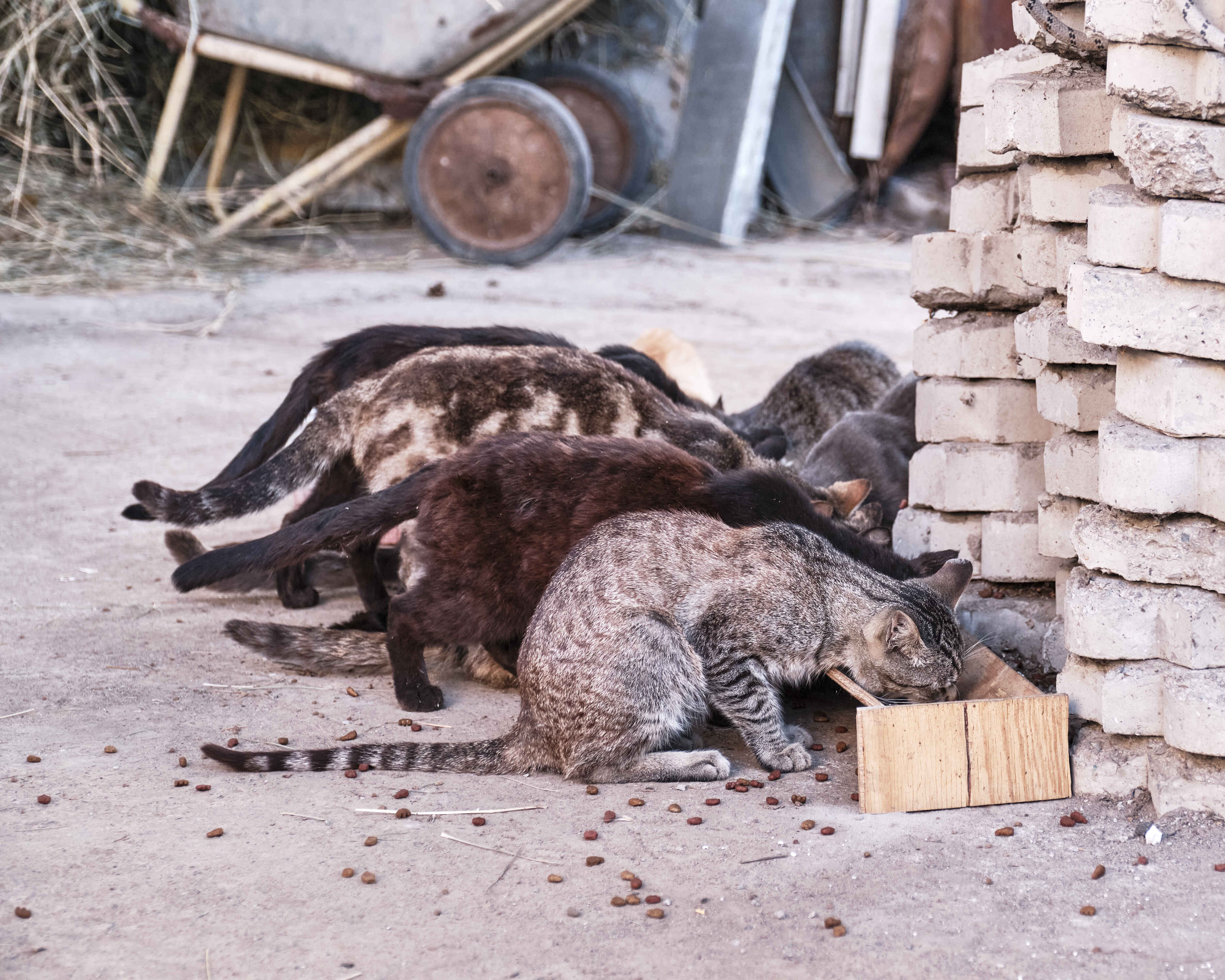
One of the most frequent questions we receive from new caretakers is exactly how much to feed feral cats. Overfeeding attracts wildlife and creates a terrible mess, while underfeeding leads to malnutrition and fierce fighting among the colony members.
An average, active adult feral cat requires approximately 200 to 250 calories per day to maintain a healthy weight. When feeding standard, high-quality dry kibble, this translates to roughly one-half cup of dry food per adult cat per day. To simplify your daily routine, use this handy feeding amount table based on your colony size:
| Number of Feral Cats | Daily Amount of Dry Kibble | Supplemental Wet Food (Optional) |
|---|---|---|
| 1 Stray Cat | 1/2 Cup | 1/2 Can (3 oz size) |
| 5 Colony Cats | 2.5 Cups | 2 to 3 Cans |
| 10 Colony Cats | 5 Full Cups | 5 Cans |
| 20 Colony Cats | 10 Full Cups | 10 Cans (or mixed thoroughly into the kibble) |
Note: If you choose to mix wet food in with the dry kibble, you must reduce the amount of dry food slightly to prevent extreme overfeeding and food waste.
6. Seasonal Advice: What to Feed Outdoor Cats in Winter vs Summer
One of the biggest mistakes beginners make is feeding the exact same amount and type of food year-round. An outdoor cat’s metabolic needs fluctuate wildly with the changing seasons.
What to Feed Outdoor Cats in Winter
In freezing temperatures, a feral cat may need up to 25 percent more calories just to stay warm and prevent hypothermia. During the bitter winter months, it is highly recommended to switch to a high-fat “Active” or “Kitten” kibble. This extra dietary fat provides the essential insulation and metabolic heat required to survive harsh winds. Furthermore, you must provide fresh water daily. Dehydration in winter is incredibly common because natural water sources freeze solid. Using a solar-powered heated water bowl is a literal lifesaver for feral colonies.
Feeding Feral Cats in the Summer
Heat exhaustion is a very real threat. While their absolute calorie demand might drop slightly as the cats nap heavily in the shade to stay cool, their physiological need for moisture increases drastically. This is the ideal time to increase the ratio of wet food in their diet to prevent dangerous dehydration. However, only put out as much wet food as the cats can eat within 30 minutes to prevent the food from spoiling in the sun or attracting aggressive swarms of insects.
7. Feral Cat Colony Feeding Tips and Schedule
Establishing a strict outdoor cat feeding schedule is the most critical aspect of feeding stray cats safely. Feral cats are creatures of habit. If you feed them at the exact same time every day, they will quickly learn your routine and be waiting for you. This allows you to visually inspect the cats for injuries or illness while they eat.
The best time to feed a colony is during daylight hours, ideally early morning or late afternoon before dusk. Never leave massive bowls of food out overnight. Leaving food out in the dark will instantly attract raccoons, opossums, skunks, and coyotes. These wild animals carry diseases and will aggressively chase the feral cats away from their own feeding station. To keep the area safe, put the food out for 45 minutes, allow the cats to eat, and then promptly remove all leftover food and clean the bowls.
Common Mistakes When Feeding Outdoor Cats
Even the most well-meaning animal lovers can inadvertently cause harm if they are not careful. When establishing your feral cat colony feeding tips, be sure to avoid these common pitfalls.
First, never feed cats cow’s milk. Despite popular cultural myths, the vast majority of adult cats are highly lactose intolerant. Feeding them a bowl of milk will cause severe stomach cramps and explosive diarrhea, leading to deadly dehydration outdoors. Stick strictly to fresh, clean water.
Second, do not feed feral cats cheap dog food. Dog food lacks taurine, a critical, life-sustaining amino acid that cats cannot biologically synthesize on their own. Feeding a cat a diet of dog food will eventually lead to irreversible blindness and fatal heart failure, a fact strictly emphasized by veterinary experts at the Cornell Feline Health Center.
Finally, we do not recommend feeding outdoor cats a raw meat diet. Between the natural bacteria found in raw chicken and the diverse pathogens these cats already encounter outside in the dirt, the risk of severe intestinal infection is simply too high to justify the practice in an unmonitored outdoor environment.
Conclusion
Finding the best food for feral cats does not require spending a fortune on luxury brands, but it does require a thoughtful, consistent approach. By focusing on high-protein, calorie-dense dry kibble, adjusting your feeding amounts for harsh winter and summer weather, and establishing a strict, daylight-only outdoor cat feeding schedule, you can drastically improve the lives of your neighborhood strays. Consistency and clean water are just as important as the food itself. Your dedication and compassionate care provide these rugged outdoor athletes with the vital energy they need to survive and thrive in their challenging environment.
Frequently Asked Questions (FAQ)
What do feral cats eat?
In the wild, feral cats are opportunistic hunters that eat a strict carnivorous diet consisting of small rodents like mice and voles, small birds, and insects. When fed by human caretakers, they thrive on high-protein commercial dry kibble and canned wet food that closely mimics this natural meat-based diet.
Can feral cats eat regular cat food?
Yes, feral cats can absolutely eat regular domestic cat food. However, because they burn significantly more calories surviving outdoors than indoor cats do, it is best to feed them high-protein, high-fat formulas, such as “Active” or “Kitten” kibble, to maintain their energy levels and body heat.
What is the best cat food for feral cats on a budget?
The most budget-friendly option for feeding a large colony is purchasing large, bulk bags of dry kibble from farm supply stores or wholesale clubs. Avoid the absolute cheapest grocery store brands full of corn fillers, as cats will simply eat twice as much of it. Look for mid-tier, high-protein dry food to get the best nutritional value for your money.
How do I keep bugs and wildlife out of feral cat food?
To keep ants away, place the cat’s food bowl inside a slightly larger, shallow pan filled with an inch of water, creating a protective “moat.” To prevent raccoons and opossums from stealing the food, strictly feed the cats during the daytime and remove all leftover food before the sun goes down. Never leave food out overnight.
How much should I feed a stray cat every day?
An average adult outdoor cat requires about 1/2 cup of high-quality dry kibble per day to maintain a healthy weight. During the freezing winter months, you may need to increase this amount by 20 to 25 percent to help them generate enough metabolic body heat to stay warm.
References & Further Reading
- Association of American Feed Control Officials (AAFCO): Official Publication on Dog and Cat Food Nutrient Profiles
- British Journal of Nutrition: Estimation of the dietary nutrient profile of free-roaming feral cats
- Cornell Feline Health Center: Feeding Your Cat: Essential Nutrients and Practices
- National Research Council: Nutrient Requirements of Dogs and Cats