

In most homes, a Husky is friendly, playful, and people-oriented. But like any high-energy breed, problems can happen when their needs are ignored. A bored, under-exercised, anxious, or poorly trained Husky may develop behaviors that feel aggressive or unsafe. In this guide, you will learn what Husky temperament is really like, when behavior problems can appear, and how to prevent them.
Quick Answer
No, Huskies are not naturally dangerous dogs. They are usually friendly and social, but they need daily exercise, consistent training, and early socialization. Without that, they can become destructive, hard to control, or even risky around small pets and young children.
Are Huskies Dangerous?
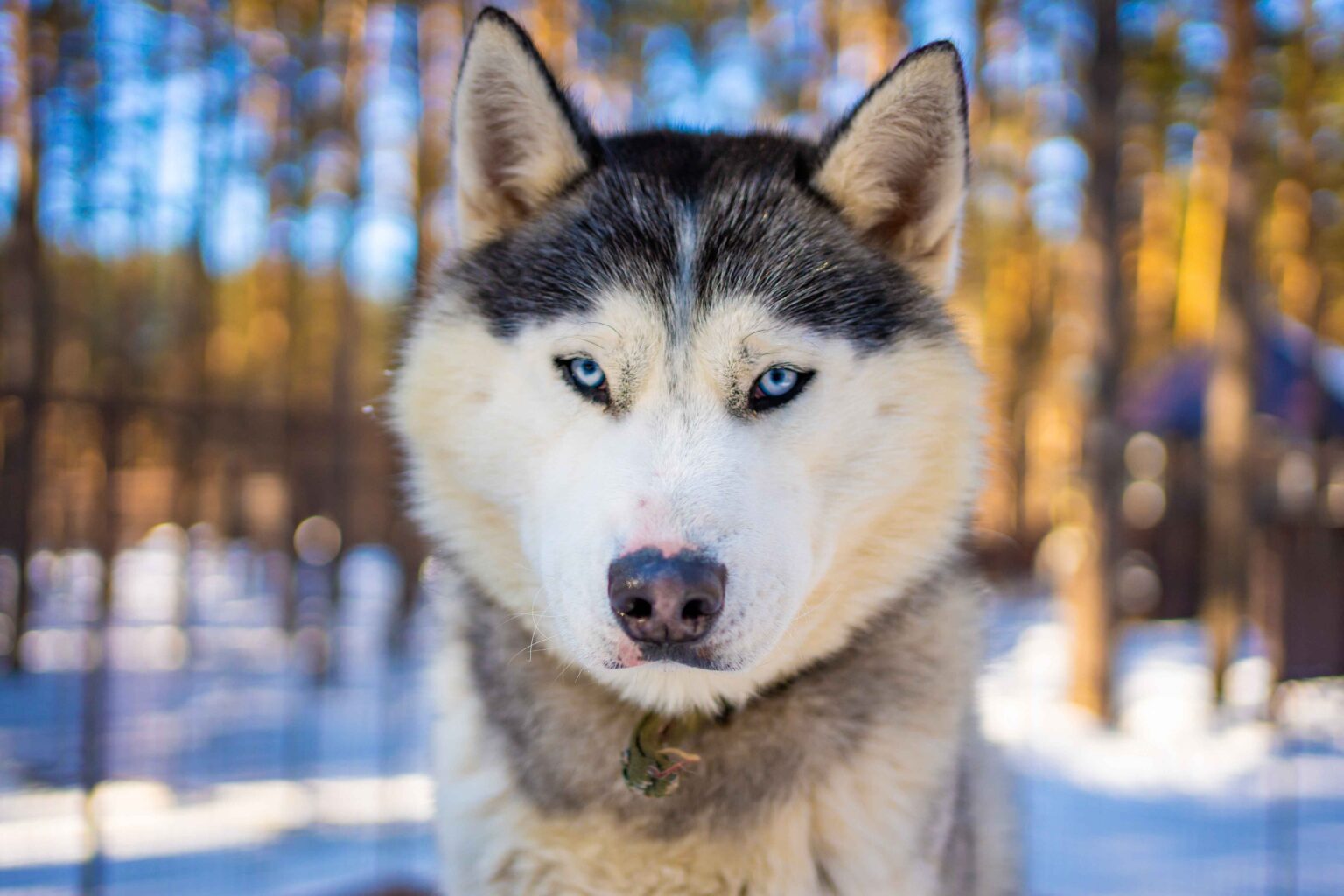
For most families, the real answer is no. Huskies are not known for being guard dogs or human-aggressive dogs. In fact, many Huskies are affectionate, silly, and very social with people.
According to the American Kennel Club, Siberian Huskies are generally friendly, outgoing, and not naturally aggressive toward people. That does not mean they are effortless dogs, though. A Husky that is frustrated, undertrained, or overstimulated can jump, pull, mouth, or behave in ways that may injure someone accidentally. Their prey drive can also make them unsafe around cats, rabbits, and other small animals if they are not supervised carefully.
So the better question is not whether Huskies are dangerous by nature, but whether they are a good fit for your lifestyle.
Are Huskies Aggressive by Nature?
No. Huskies were bred to work in packs and live closely with humans. That history matters. They were not bred to be protective, territorial, or suspicious of strangers.
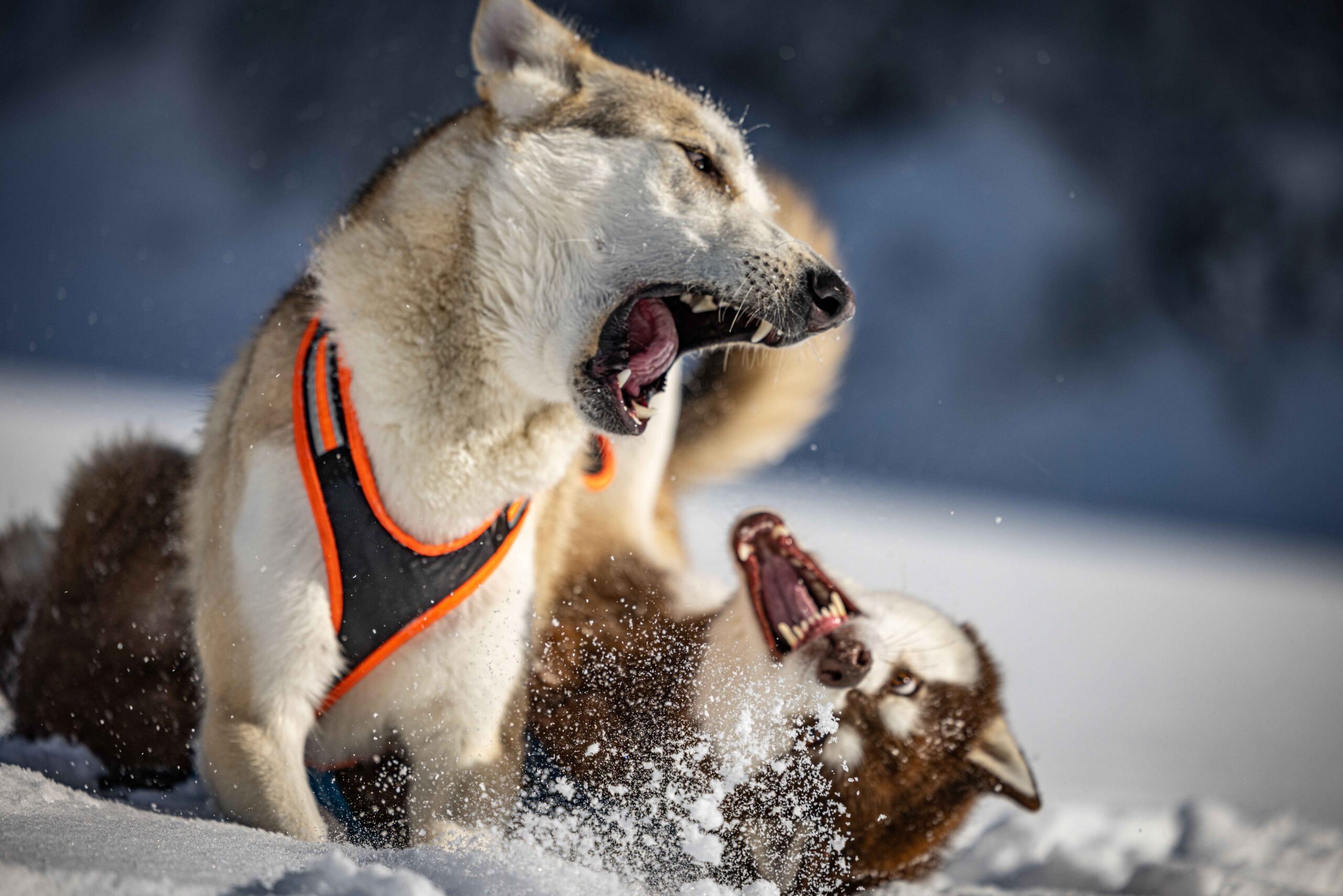
Most behavior that people call “aggression” in Huskies is really something else: too much energy, poor impulse control, fear, stress, or lack of training. The ASPCA explains that aggression in dogs is often linked to environment, training, and stress rather than breed alone. A Husky may jump, vocalize, mouth, or act wild during play, but that does not automatically mean the dog is aggressive.
Their communication style also confuses people. Huskies are famously vocal, and their howling, grumbling, and “talking” can sound intense even when the dog is simply excited.
Friendly But High-Energy
The core of the Husky temperament is friendliness mixed with boundless energy. They love people, and they thrive on companionship. The behavioral issues that most people confuse with “aggression” like jumping, mouthing, or destructive chewing are almost always the result of a dog that has too much pent-up energy and no outlet. A Husky does not want to hurt you; they just want to run, play, and work.
It is also important to note their famous vocalizations. Huskies rarely bark, but they howl, “talk,” and grumble. A Husky howling or vocalizing loudly when playing is often mistaken for aggression by people unfamiliar with the breed, but it is simply how they communicate their excitement.
When Can Huskies Become Dangerous or Aggressive?
While Huskies are naturally friendly, any dog can become dangerous under the wrong circumstances. A dog’s behavior is a direct product of its environment. If a Husky exhibits dangerous or aggressive behavior, it is almost always triggered by one of the following factors:
1. Lack of Training
Huskies are notoriously stubborn and highly intelligent. If you do not train them, they will train you. A Husky without basic obedience training does not know how to control their impulses. This can lead to a 60-pound dog jumping on children, resource-guarding their food, or pulling aggressively on the leash, which can easily cause injury.
2. No Exercise
This is one of the biggest causes of behavioral issues in Huskies. If you leave a sled dog in an apartment for ten hours a day with only a brief walk around the block, they will lose their minds. Severe boredom leads to frustration. This pent-up energy can manifest as destructive chewing, frantic pacing, and redirected aggression when they are finally interacted with.
3. Fear and Anxiety
Fear-based reactions are one of the most common causes of aggression in dogs. The VCA Animal Hospitals explains that dogs may bite when they feel threatened and unable to escape. If a Husky is cornered, abused, or terrified by a loud noise and cannot run away, they may resort to biting to protect themselves. Fear-based aggression is common in rescue dogs with unknown trauma.
4. Poor Socialization
If a Husky puppy is not exposed to a wide variety of people, environments, and other dogs during their critical development window between 3 and 14 weeks of age, they will view the world as a terrifying place. An unsocialized Husky is highly unpredictable and may react aggressively to strangers simply because they do not know how to process the new situation.
Signs of Aggression in Huskies
Because Huskies are so vocal and playful, it is vital to know the difference between play-fighting and true aggression. If your dog is feeling threatened or aggressive, they will display clear warning signs before they bite:
- A stiff, frozen body posture
- Curling of the lips and baring teeth
- Deep, low-pitched growling, different from their playful talking
- Whale eye, when the dog turns its head slightly but keeps its eyes fixed on you, showing the whites of their eyes
- Air-snapping or biting the air near you
- Raised hackles along the back
- Tail held rigid instead of loose and wagging
If you notice these signs repeatedly, the dog may be stressed, fearful, or over threshold.
Are Huskies Safe With Children?
Usually, yes, if the dog is well trained and the children are supervised. Huskies can be playful and affectionate with kids, but they are strong dogs with a lot of energy. That means rough play, jumping, and excitement can become unsafe quickly.
A well-managed Husky can be a great family dog. A bored, untrained, or overly excited Husky may knock children over or play too roughly. Supervision matters.
Are Huskies Safe Around Other Pets?
Not always. Huskies often do well with other dogs, especially when they are raised together and socialized properly. But they may not be the safest choice for homes with small pets like cats, rabbits, guinea pigs, or birds.
That is because many Huskies have a strong prey drive. Even a well-behaved Husky may chase small animals if they move quickly. If you already have small pets, slow introductions and constant supervision are essential.

How to Prevent Husky Behavior Problems
The best way to keep a Husky safe and manageable is to meet their needs every day.
Proper training, socialization, and understanding canine behavior are essential to preventing problems, as recommended by the RSPCA.
Give them enough exercise
A Husky needs much more than a short walk. Running, hiking, structured play, and active games help burn off energy in a healthy way.
Train early and stay consistent
Basic obedience should start young. Teach sit, stay, come, leave it, and leash manners. Keep rules consistent so your dog knows what is expected.
Socialize early
A Husky puppy should be exposed to many people, places, and sounds in a positive way. Good early socialization lowers fear and helps prevent reactivity.
Provide mental stimulation
Use puzzle toys, scent games, training sessions, and interactive play. A tired brain matters just as much as a tired body.
Do not encourage rough habits
Jumping, biting at hands, and wild play may look cute in a puppy, but they become much bigger problems in an adult Husky. Set boundaries early.
When to Get Help
If your Husky is growling, snapping, lunging, or showing fear-based behavior, talk to a veterinarian or qualified trainer. Sudden behavior changes can also point to pain or another medical issue.
Do not wait until the problem gets worse. Early help is usually much easier than trying to correct a long-term behavior issue later.
Final Verdict
So, are Huskies dangerous? Not inherently. They are usually friendly, social dogs that do best with active owners who can meet their physical and mental needs. When they are trained, exercised, and properly socialized, Huskies can be loving and loyal companions. When they are ignored or poorly managed, they can become chaotic, destructive, and sometimes unsafe.
FAQ
Are Huskies good family dogs?
Yes, many Huskies can be excellent family dogs if they are trained well and get enough exercise.
Do Huskies bite often?
No, Huskies are not generally known for biting often, but any dog can bite if they are scared, stressed, or mishandled.
Are Huskies aggressive toward strangers?
Usually no. Most Huskies are social and friendly, not naturally suspicious of people.
Are Huskies hard to train?
They can be, because they are independent and strong-willed. Consistency and patience are important.
Do Huskies need a lot of exercise?
Yes. Their high energy level is one of the biggest reasons they need an active home.
References
- Quick Answer
- Are Huskies Dangerous?
- Are Huskies Aggressive by Nature?
- When Can Huskies Become Dangerous or Aggressive?
- Signs of Aggression in Huskies
- Are Huskies Safe With Children?
- Are Huskies Safe Around Other Pets?
- How to Prevent Husky Behavior Problems
- Give them enough exercise
- Train early and stay consistent
- Socialize early
- Provide mental stimulation
- Do not encourage rough habits
- When to Get Help
- Final Verdict
- FAQ
- Are Huskies good family dogs?
- Do Huskies bite often?
- Are Huskies aggressive toward strangers?
- Are Huskies hard to train?
- Do Huskies need a lot of exercise?
- References