


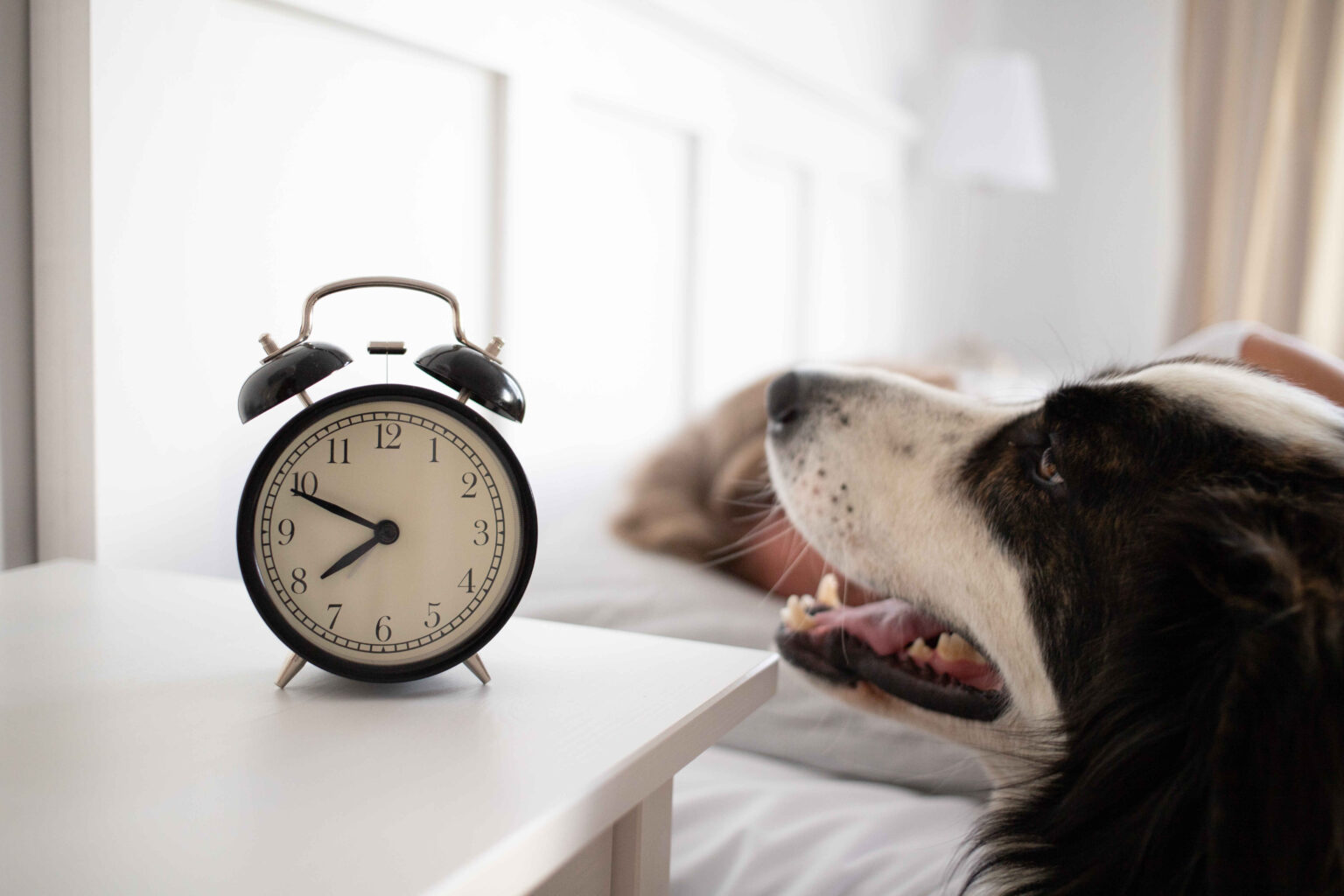
As humans, we navigate our lives governed by the ticking of clocks, the alerts on our smartphones, and meticulously planned calendars. We understand time linearly in the past, present, and future. But as we look at our canine companions, a profound question arises: do dogs understand time? Do they truly miss us when we leave for work, or do they simply exist in a state of eternal “now,” only reacting to the immediate stimuli around them?
- How Do Dogs Understand Time? The Role of Episodic-Like Memory
- The Olfactory Clock: How Dogs “Smell” Time
- Do Dogs Miss Their Owners?
- Do Dogs Know How Long You’ve Been Gone?
- Circadian Rhythms and the Biological Master Clock
- How Age Impacts Canine Time Perception
- How to Use Your Dog’s Sense of Time to Ease Separation Anxiety
- Conclusion
- Frequently Asked Questions (FAQs)
- Can dogs tell time?
- Do dogs miss their owners when they go to work?
- How do dogs know it’s feeding time?
- Is one human hour like seven dog hours?
- Can dogs sense when you’re coming home?
- References & Clinical Sources
For decades, the prevailing scientific consensus was that animals were stuck in time, lacking the cognitive hardware to reflect on the past or anticipate the future. However, modern canine cognitive science has shattered this assumption. While your dog cannot read a digital clock or understand the concept of “next Tuesday,” they possess an incredibly sophisticated temporal awareness. Driven by intricate circadian rhythms, associative memory, and an astonishing ability to literally smell time, dogs experience the passage of hours in a way that is uniquely their own.
Short Answer: Yes, dogs do understand time, but they do not perceive it linearly like humans do. Instead of reading clocks, dogs rely on their circadian rhythms, associative memory, and their powerful sense of smell (the olfactory clock) to understand the passage of time and anticipate future events.
How Do Dogs Understand Time? The Role of Episodic-Like Memory
To fully grasp how do dogs understand time, we must first look at memory. Humans possess episodic memory, which is the ability to mentally travel back in time and vividly recall a specific event, including the emotional context, the location, and the timeline. Historically, it was believed that dogs only possessed semantic memory (associative learning). For example, they know that the command “sit” results in a treat, but they don’t necessarily remember the specific Tuesday afternoon they learned the command.
However, recent behavioral studies have proven that dogs possess what scientists call episodic-like memory. A groundbreaking study conducted by ethologist Dr. Claudia Fugazza, published in Current Biology, utilized a training method called “Do As I Do.” Dogs were trained to watch a human perform a novel action (like tapping an umbrella) and were later unexpectedly asked to imitate it. The dogs successfully replicated the action, proving they could recall a specific past event and their own perspective of it, even when they weren’t explicitly trained to memorize it in the moment.
This reveals that dogs are not entirely trapped in the present. They have a functional awareness of the past, which serves as the foundation for their ability to anticipate the future.
The Olfactory Clock: How Dogs “Smell” Time
Perhaps the most fascinating aspect of how dogs perceive time is their reliance on their noses. For a dog, time is a highly visual and olfactory experience. Dr. Alexandra Horowitz, a leading canine cognition researcher, famously theorized that dogs can actually smell time.
In the canine world, scents are dynamic. They do not just exist; they move, degrade, and change over time. When you leave your house for work in the morning, you leave behind a strong, concentrated cloud of your personal scent. As the hours pass, this scent slowly degrades and dissipates into the environment. Because a dog’s olfactory system is up to 100,000 times more sensitive than a human’s, they can track the specific rate at which your scent decays.
If you return home every day at 5:00 PM, your dog learns to associate a specific concentration (or weakness) of your scent with your imminent return. When the scent hits that precise threshold of decay, the dog will go wait by the door. They aren’t counting the hours; they are reading the olfactory clock left behind in your living room.
Do Dogs Miss Their Owners?
It is a question every pet parent asks when closing the front door: do dogs miss their owners? The emotional reality of a dog waiting by the door is absolutely backed by science. Because dogs form intense associative memories, your specific scent and visual cues are permanently hardwired to feelings of safety, love, and joy. When you leave, the disruption of their routine and the gradual fading of your scent create a genuine longing for your return. This deep emotional connection explains the immense joy they display when you finally walk back inside.
Do Dogs Know How Long You’ve Been Gone?
A common question among pet owners is whether a dog can tell the difference between a quick trip to the grocery store and a full eight-hour workday. The answer is yes, they can accurately perceive the duration of your absence.
In a pivotal study published in Applied Animal Behaviour Science, researchers Therese Rehn and Linda Keeling observed the greeting behaviors of privately owned dogs after their owners had been away for 30 minutes, 2 hours, and 4 hours. The study found that dogs greeted their owners with significantly more intensity, tail wagging, and physical contact after two hours compared to 30 minutes. While the difference in excitement between two hours and four hours was less pronounced, the data clearly indicated that dogs know how long you are gone and recognize extended periods of isolation.
This perception of duration is critical when addressing dog separation anxiety. Dogs that suffer from this condition are not just acting out; they are experiencing genuine distress as the physical and environmental markers of time stretch far beyond their comfort zones.

Circadian Rhythms and the Biological Master Clock
Beyond their noses, dogs are deeply governed by their physiological states. Like all mammals, dogs operate on a 24-hour biological cycle known as a circadian rhythm. This internal clock is controlled by a region in the brain called the suprachiasmatic nucleus (SCN), which responds directly to light and darkness.
This biological rhythm dictates a dog’s daily fluctuations in body temperature, heart rate, and hormone production. To understand how dogs know feeding time without looking at a watch, we can compare human habits to canine biology:
| Human Timekeeping | Canine Biological Timekeeping |
|---|---|
| Looks at a digital watch at 5:00 PM for dinner. | Senses a specific drop in blood sugar and an emptying stomach. |
| Sets a morning alarm on a smartphone for 6:30 AM. | Experiences a natural, biological cortisol spike to wake up as the sun rises. |
| Checks the clock on the wall before a walk. | Recognizes the exact angle of shadows stretching across the living room floor. |
This explains why a dog will wake you up at exactly 6:30 AM for their morning walk, even on a Sunday. Their cells and digestive organs do not observe the weekend. Their biological clock demands consistency, which is exactly why maintaining strict dog feeding schedules is so crucial for their well-being.
How Age Impacts Canine Time Perception
Just as a human’s perception of time can shift with age, cognitive decline, or an individual dog’s breed traits, an aging dog’s internal biological clock can also become severely disrupted. This is particularly evident in dogs suffering from Canine Cognitive Dysfunction (CCD), a condition analogous to Alzheimer’s disease in humans.
Senior dogs with CCD often experience a complete breakdown in their circadian rhythms. This manifests as “sundowning,” where the dog becomes disoriented, anxious, or restless as evening approaches. They may sleep erratically during the day and pace the house at night. Their ability to read the environmental and olfactory cues that previously structured their day begins to fade, leaving them feeling lost in time. Maintaining strict, predictable routines is the most effective non-medical intervention for senior dog care and managing this decline.
How to Use Your Dog’s Sense of Time to Ease Separation Anxiety
Understanding how do dogs understand time empowers owners to create a more harmonious, stress-free environment. Because dogs rely heavily on environmental cues and biological rhythms rather than abstract timekeeping, predictability is their ultimate source of comfort.
Expert Advice for Dog Owners:
- Maintain Strict Feeding Windows: Because a dog’s internal clock is heavily tied to their digestion, feeding them at unpredictable times causes biological stress. Aim to feed your dog within the exact same 30-minute window every day to satisfy their circadian rhythm.
- Reset the Olfactory Clock: If you work long hours and your dog struggles with separation anxiety, you can “hack” their scent clock. Leave a recently worn piece of clothing, like a t-shirt or socks, in their bed before you leave. The fresh concentration of your scent can trick their olfactory clock into thinking you haven’t been gone as long, effectively reducing anxiety.
- Create Pre-Departure Cues: Help your dog anticipate the future by establishing clear routines. Using a specific phrase like “I’ll be right back” for short trips to the grocery store, versus a different routine for long workdays, helps them accurately categorize the anticipated duration of your absence.
Conclusion
While dogs may not share our human obsession with ticking seconds and future planning, their relationship with time is rich, complex, and deeply ingrained in their biology. From the gradual decay of scents in the air to the precise hormonal shifts of their circadian rhythms, dogs are profoundly connected to the rhythmic flow of the world around them. So, when someone asks, do dogs understand time, you can confidently say yes. By embracing how dogs perceive time, we can step out of our own human-centric worldview and build a life that honors their natural instincts, resulting in a happier, more confident, and deeply loved companion.
Frequently Asked Questions (FAQs)
Can dogs tell time?
Dogs cannot read clocks or understand human concepts like hours or minutes. However, they can “tell time” by reading biological rhythms (like a drop in blood sugar) and environmental cues, such as the specific angle of shadows on the floor and the fading scent of their owner in the house.
Do dogs miss their owners when they go to work?
Yes. Studies show that dogs greet their owners with significantly more intensity and excitement after two hours compared to just 30 minutes. This indicates they feel the duration of your absence and experience genuine longing for your return.
How do dogs know it’s feeding time?
A dog knows it is feeding time through a combination of their internal circadian rhythms, the physical sensation of their stomach emptying, and observing your daily routine cues. Their digestive tract acts as a highly accurate internal alarm clock.
Is one human hour like seven dog hours?
No. The idea that one human year equals seven dog years is a widespread myth, and it does not apply to their daily perception of time. Dogs experience time through biological events and sensory input rather than a mathematical multiplication of human hours.
Can dogs sense when you’re coming home?
Yes. This is a combination of associative learning and the olfactory clock. They may hear the specific rumble of a familiar car engine from down the street, or they may recognize that your morning scent has degraded to the exact level it usually reaches right before you walk through the door.
References & Clinical Sources
- Middle East Technical University (METU) Open Access
- Fugazza, C., et al. (2016): Recall of Others’ Actions after Incidental Encoding Reveals Episodic-like Memory in Dogs. Current Biology, 26(23), 3209-3213.
- Rehn, T., & Keeling, L. J. (2011): The effect of time left alone at home on dog welfare. Applied Animal Behaviour Science, 129(2-4), 129-135.
- Landsberg, G., et al. (2012): Cognitive Dysfunction Syndrome in Dogs. Veterinary Clinics of North America: Small Animal Practice.
- Horowitz, A. (2009): Inside of a Dog: What Dogs See, Smell, and Know. Scribner.