

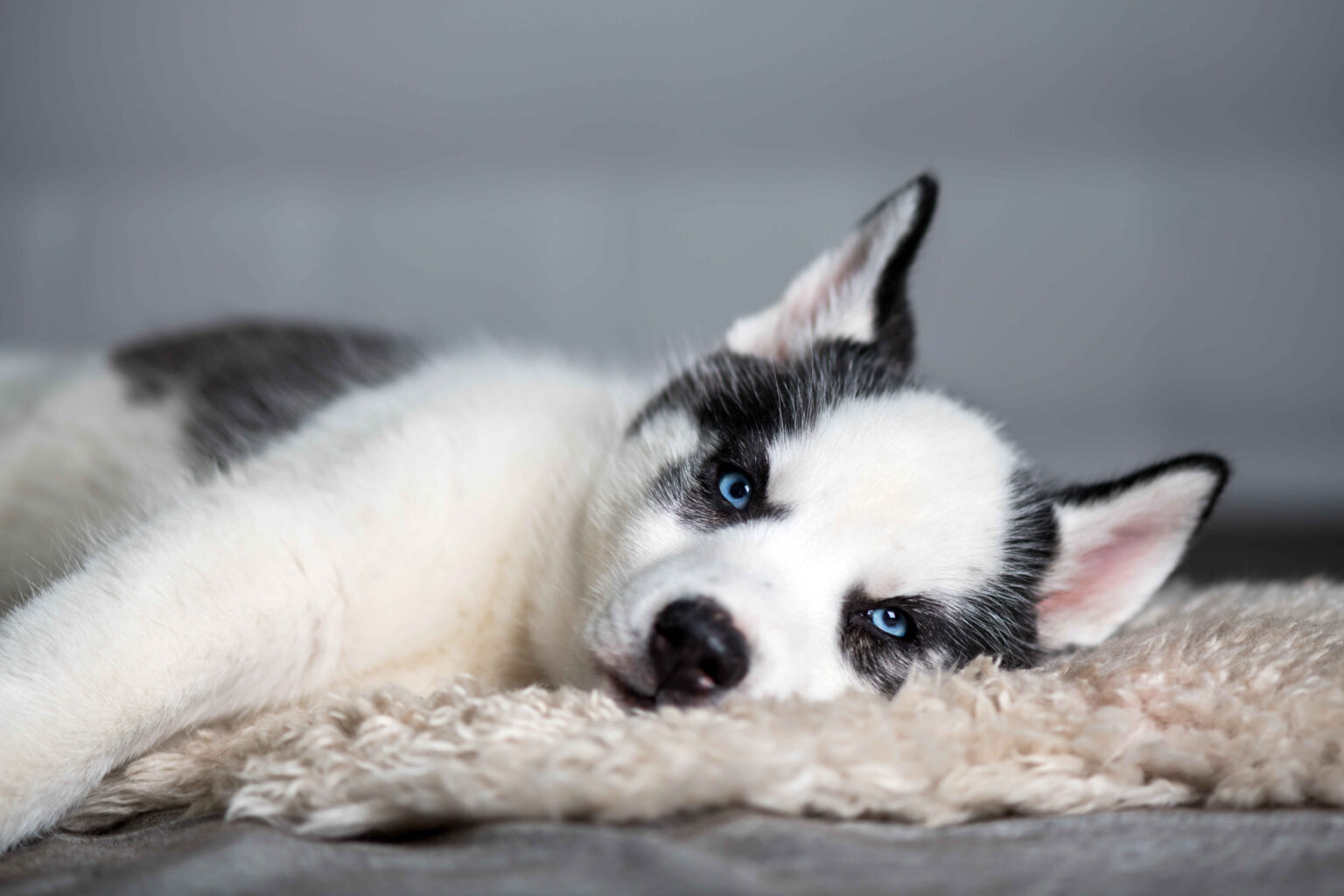
Huskies are a captivating breed known for their friendly demeanor, wolf-like appearance, and striking physical attributes. Originally bred as endurance sled dogs across harsh, icy terrains, they possess remarkable stamina and a mischievous, highly vocal personality. (If you want to see how they compare to other sled dogs and popular mixes, check out our guide to the 16 Types of Husky Breeds: Ultimate Guide to Purebreds & Mixes).
- The Initial Eye Color at Birth
- Timeline: When Do Husky Puppies’ Eyes Change Color?
- Why Do Huskies Have Blue Eyes? (The Genetics)
- Siberian Husky Eye Color Chart
- The Phenomenon of Heterochromia (Bi-Eyed Huskies)
- Can Diet or Health Affect Eye Color?
- Final Thoughts: Embracing the Unique Beauty of Husky Eyes
- Frequently Asked Questions (FAQ)
- References & Further Reading
However, it is their eyes that truly set them apart. Staring into the face of a Siberian Husky often means looking into piercing, ice-blue eyes. But did you know that a Husky puppy’s eye color at birth is rarely the color they will have as an adult? The transition of a Husky puppy’s eye color is a fascinating genetic journey.
If you have recently brought a Husky puppy home, you are likely wondering: When will my puppy’s eyes stop changing? Will they stay blue? In this comprehensive guide, we will explore the timeline of Husky eye color development, the genetics behind their famous blue eyes, and the beautiful phenomenon of heterochromia.
The Initial Eye Color at Birth
When Siberian Husky puppies are born, their eyes are sealed tightly shut to protect their developing optical nerves. It typically takes around 10 to 14 days for their eyelids to begin opening. When they finally do open, you will notice a specific, cloudy hue.
At this stage, almost all Husky puppies reveal a dark, hazy blue or grayish tint. This initial color is not their permanent eye color. It is simply a result of low melanin levels. Melanin is the pigment responsible for the coloration of hair, skin, and eyes in most animals. Because a newborn puppy’s body has not yet started fully producing melanin in the iris, the eyes appear blue or gray by default.
As the puppies develop and their eyes are exposed to light over the next few weeks, melanin production will begin, and their true genetic eye color will slowly start to emerge.
Timeline: When Do Husky Puppies’ Eyes Change Color?
The transition from a newborn’s hazy gray to a striking adult eye color does not happen overnight. It is a gradual, growing transition that spans several months.
- Weeks 1–2: Eyes remain closed.
- Weeks 3–4: Eyes open, appearing cloudy blue or dark gray. Vision is still quite blurry.
- Weeks 5–8: This is the most active period of change. Melanin production kicks in. If the eyes are destined to be brown, you will begin to see brown flecks or a muddy “hazel” transition ring spreading from the pupil outward. If they are destined to stay blue, the hazy newborn gray will clear up into a sharp, piercing, icy blue.
- Weeks 12–16: By 3 to 4 months of age, the eye color typically stabilizes. The color you see at 16 weeks is almost certainly the dog’s permanent adult eye color.
Owner Tip: If you want to track this fascinating transformation, take a photo of your puppy’s face in natural sunlight every week from the day they open their eyes until they are four months old!
Why Do Huskies Have Blue Eyes? (The Genetics)

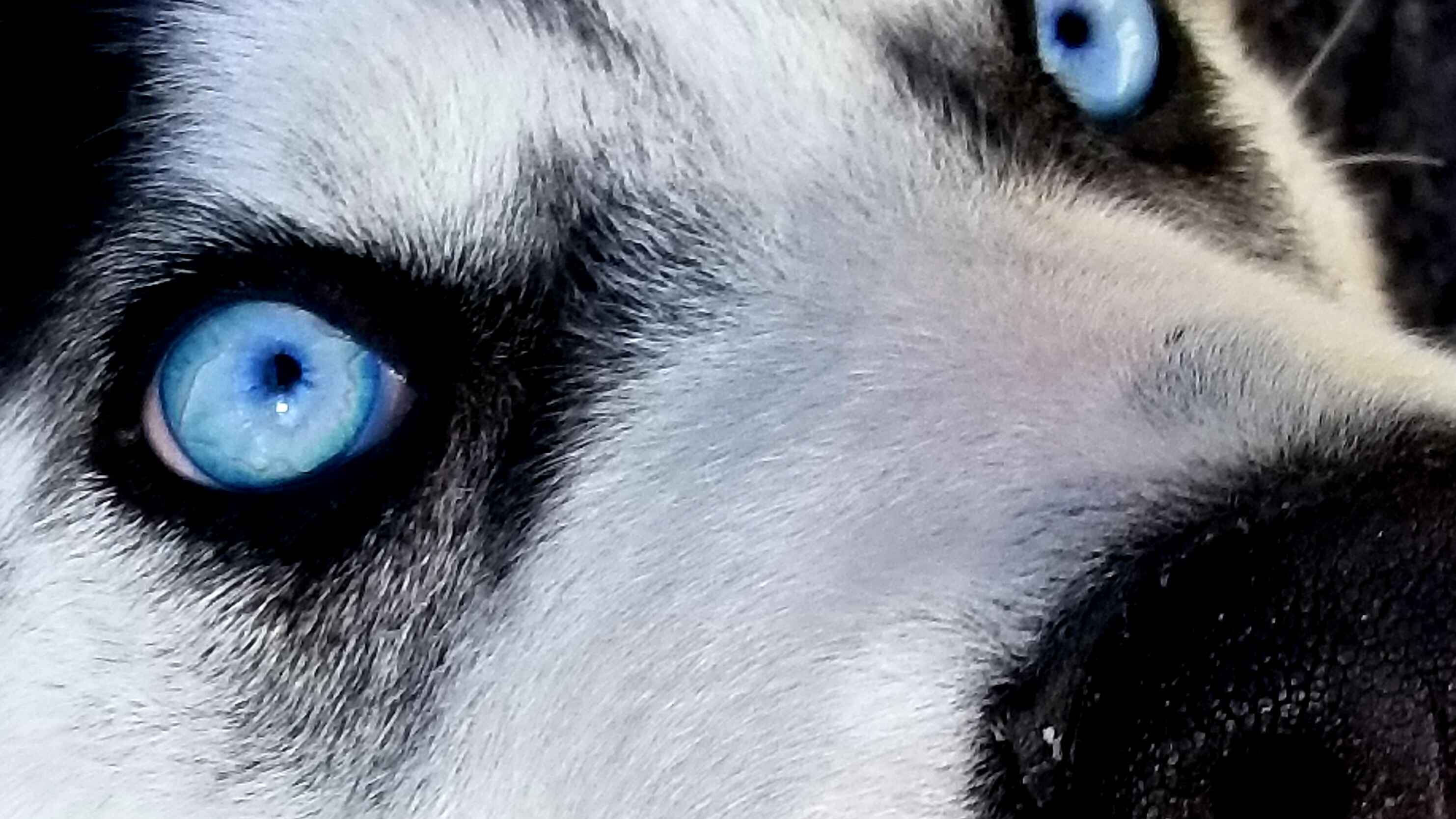
One of the most striking features of Siberian Huskies is their stunning blue eyes. But why is this trait so common in Huskies, while it is incredibly rare in breeds like Golden Retrievers or Pugs?
In most dog breeds, blue eyes are linked to the “Merle” gene (which causes a mottled coat pattern) or the piebald gene (which causes excessive white on the face). However, Huskies are entirely unique.
Recent canine genetic research, including extensive DNA mapping by Embark Veterinary, discovered that the blue eyes in Siberian Huskies are caused by a specific genetic mutation near the ALX4 gene on canine chromosome 18. This mutation suppresses melanin production in the iris but does not affect the dog’s coat color or their hearing (which can happen in other breeds with blue eyes).
Because this is a naturally occurring, deeply embedded mutation in the Siberian Husky gene pool, a Husky can be completely solid black, pure white, or copper, and still possess crystal-clear blue eyes.
Siberian Husky Eye Color Chart
While blue is the most famous, it is far from the only color a Husky can have. The breed standard allows for several stunning variations:
| Eye Color | Description & Rarity |
|---|---|
| Ice Blue | The classic, piercing light blue. Very common in the breed. |
| Deep Brown | A rich, warm, chocolate brown. Just as common and genetically standard as blue. |
| Amber / Green | A rare, yellowish-green or light amber hue caused by moderate melanin production. |
| Parti-Colored (Split) | A single eye contains two distinct colors (e.g., the top half is blue, the bottom half is brown). Rare and stunning. |
The Phenomenon of Heterochromia (Bi-Eyed Huskies)
Photo by Chris Knight
Heterochromia is a genetic condition that results in an individual possessing two different eye colors. In the Husky world, a dog with heterochromia is commonly referred to as being “bi-eyed.”
A bi-eyed Husky might have one striking ice-blue eye and one deep brown eye. This phenomenon occurs when there is an uneven distribution of melanin during the puppy’s development in the womb. One iris receives the pigment (turning brown), while the other does not (remaining blue).
While heterochromia can occur in a few other breeds (like Australian Shepherds and Border Collies), it is incredibly prominent and celebrated in Siberian Huskies. It is completely accepted by the American Kennel Club (AKC) breed standard and does not negatively affect the dog’s vision or overall dog health in any way. It simply makes each dog visually unique and adds to their allure.
Can Diet or Health Affect Eye Color?
The final color of a Husky’s eyes is dictated entirely by their DNA. No amount of premium dog food, supplements, or environmental changes will turn a brown-eyed dog into a blue-eyed dog.
However, sudden changes in an adult dog’s eye color are a major red flag for health issues. If your puppy’s eyes have stabilized, but later in life you notice the eyes becoming cloudy, gray, or red, this is not a natural color shift. It could be an indication of:
- Cataracts: A clouding of the eye’s lens, leading to blindness (Huskies are genetically prone to juvenile cataracts).
- Corneal Edema: Fluid buildup in the eye causing a bluish haze.
- Glaucoma: Increased pressure in the eye resulting in redness and bulging.
If you notice persistent redness, discharge, or a sudden cloudy haze over your adult dog’s eyes, you must consult a veterinarian immediately to rule out serious large breed health issues.
Final Thoughts: Embracing the Unique Beauty of Husky Eyes
The changing eye color of Husky puppies is a fascinating phenomenon that captivates dog lovers worldwide. From the cloudy gray of a newborn to the sharp, piercing blue, warm brown, or magical bi-eyed look of an adult, witnessing this transformation is one of the joys of raising a Siberian Husky.
Remember that while their eyes are beautiful, Huskies are high-energy, demanding working dogs that require rigorous dog training and daily exercise. Whether your puppy grows up to have crystal blue eyes, deep brown eyes, or one of each, they will use those beautiful eyes to beg for treats, demand walks, and show you unwavering affection for years to come.
Frequently Asked Questions (FAQ)
When do Husky puppies’ eyes stop changing color?
While the most dramatic shifts occur between 5 and 8 weeks of age, a Husky puppy’s eye color will typically stabilize and become permanent by the time they are 12 to 16 weeks (3 to 4 months) old.
Are blue-eyed Huskies prone to blindness?
No. In some dog breeds, the gene that causes blue eyes is linked to deafness or blindness (such as the double-merle gene). However, the specific ALX4 genetic mutation that causes blue eyes in Siberian Huskies is entirely benign and does not affect their vision or hearing.
Can a Husky have green eyes?
Yes, though it is quite rare. If a Husky produces a very specific, moderate amount of melanin, their eyes may appear light amber, hazel, or a striking yellowish-green.
Do bi-eyed (heterochromia) Huskies have vision problems?
No. Heterochromia is simply a lack of pigment in one eye. It has absolutely no impact on the dog’s visual acuity or overall health.
References & Further Reading
- Embark Veterinary: Why Do Huskies Have Blue Eyes? The Genetics Explained – embarkvet.com
- American Kennel Club (AKC): Siberian Husky Breed Standard – akc.org
- Siberian Husky Club of America (SHCA): Breed Health and Eye Certifications – shca.org
- Veterinary Centers of America (VCA): Cataracts in Dogs – vcahospitals.com