
Air travel with your pet can be a fun and exciting experience, but it requires meticulous planning and preparation to ensure a safe, comfortable, and stress-free journey. Whether you are traveling with your furry friend for a long-awaited vacation or a permanent cross-country relocation, navigating the complexities of modern airlines can feel overwhelming.
- Pre-Flight Planning: Weeks Before You Fly
- 1. Check Airline Regulations and Breed Restrictions
- 2. Get a Comprehensive Health Check-Up
- 3. Book Your Pet’s Travel Well in Advance
- Choosing and Preparing the Carrier
- Booking the Best Itinerary
- The Day of the Flight: Ensuring Comfort and Safety
- 8. Exercise Your Pet Before the Flight
- 9. Avoid Feeding Your Pet Before the Flight
- 10. The Sedation Debate: Why You Should Avoid It
- 11. Navigating Airport Security (TSA) Safely
- 12. Pack a Pet Carry-On Emergency Kit
- Conclusion
- Frequently Asked Questions (FAQ)
- Can I buy a seat for my dog on an airplane?
- Is it safe for a dog to fly in the cargo hold?
- How do pets go to the bathroom on a long flight?
- References
You are certainly not alone in wanting to bring your best friend along. According to a recent survey from Petplan Insurance, more than 78 percent of pet owners say they take their pet with them on vacation, an increase of eight percent over previous years.
However, flying is a highly unnatural experience for animals. The loud noises, changes in cabin pressure, and unfamiliar environments can trigger severe anxiety. In this comprehensive guide, we will provide you with the top 12 expert tips for safe and stress-free air travel with your pet. By following these veterinarian-approved steps, you can help ensure a smooth journey and make unforgettable memories together.
Pre-Flight Planning: Weeks Before You Fly
1. Check Airline Regulations and Breed Restrictions
Each airline has its own strict set of rules and regulations when it comes to traveling with pets, and these policies change frequently. Before booking a ticket, you must confirm their specific policies.
- Cabin vs. Cargo: Most airlines allow small dogs and cats that can fit under the seat to fly in the cabin for a fee. Larger dogs must fly in the climate-controlled cargo hold.
- Breed Restrictions: Almost all major airlines have banned brachycephalic (snub-nosed) breeds—like Pugs, French Bulldogs, and Persian cats—from flying in the cargo hold. Their shortened airways make them highly susceptible to fatal respiratory distress at high altitudes.
2. Get a Comprehensive Health Check-Up
You cannot simply show up at the airport with your pet. You must obtain a Certificate of Veterinary Inspection (CVI), commonly known as a health certificate, issued by a federally accredited veterinarian.
For domestic flights, this certificate is usually required within 10 days of your travel date. If you are traveling internationally, the rules are vastly more complex, often requiring months of preparation, specific microchips, rabies titer blood tests, and strict quarantine documentation. Always check your destination country’s exact import requirements.
3. Book Your Pet’s Travel Well in Advance
Never assume you can just add your pet to your ticket at the airport counter. Airlines place a strict limit on the total number of pets allowed in the cabin per flight (usually between 4 and 6 total pets).
Always call the airline directly to book your ticket and your pet’s reservation at the exact same time. By booking your pet’s travel in advance, you guarantee their spot and avoid the heartbreak of being turned away at the gate.

Choosing and Preparing the Carrier
4. Choose the Right IATA-Approved Carrier
Your pet’s carrier is their only safe haven during the flight, so it must meet specific airline guidelines.
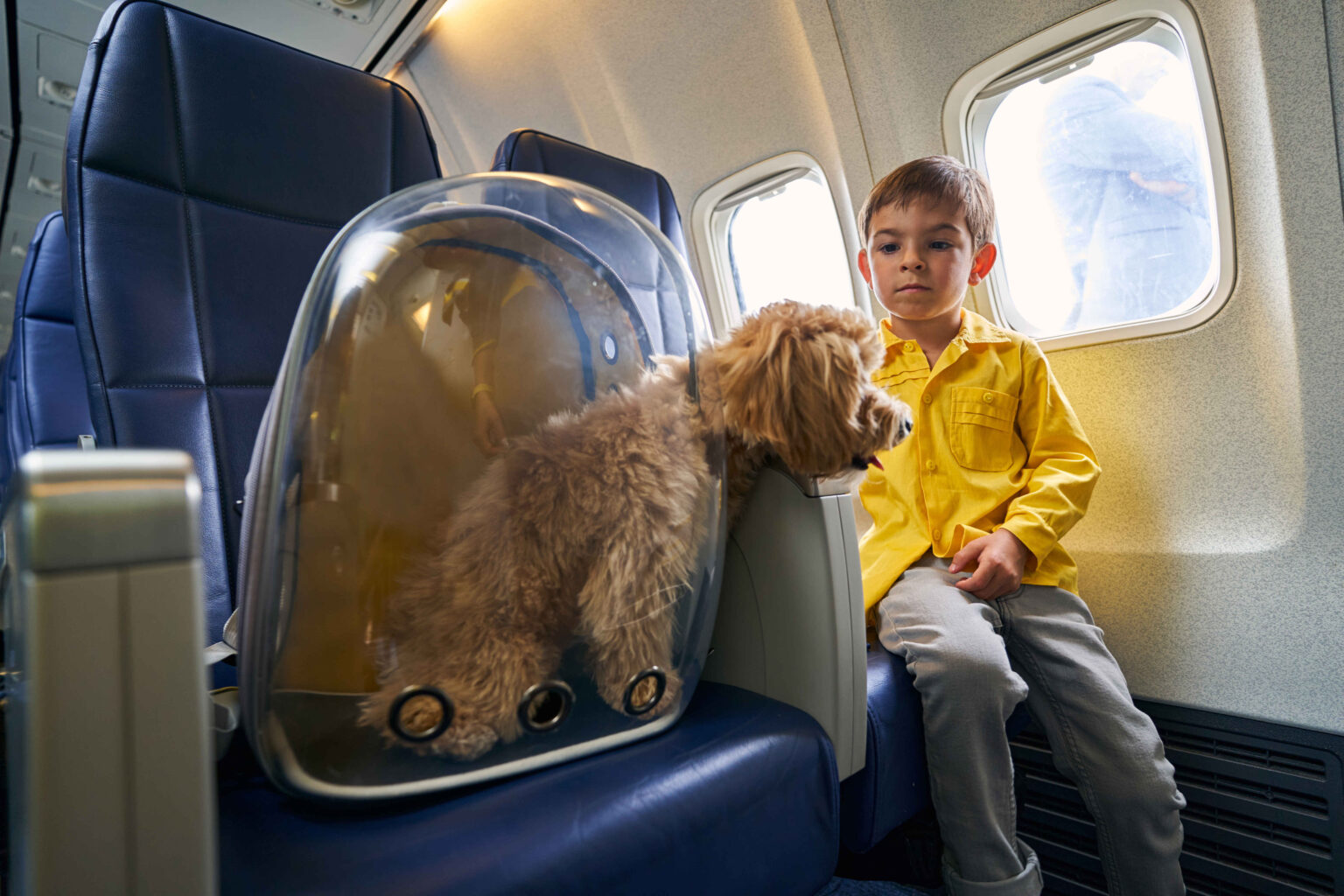
- For Cabin Travel: Soft-sided carriers are generally preferred because they can squish slightly to fit under the airplane seat. The carrier must be leak-proof and well-ventilated.
- For Cargo Travel: The crate must be hard-sided, incredibly sturdy, and feature metal (not plastic) nuts and bolts. It must be large enough for your pet to stand up, turn around completely, and lie down comfortably without touching the top.
5. Acclimate Your Pet to the Carrier
This is arguably the most important step for reducing travel anxiety! Do not force your pet into a brand-new carrier on the morning of the flight.
Weeks before your trip, leave the carrier open in your living room. Place their favorite blanket, high-value treats, and familiar toys inside. Feed them their meals next to or inside the carrier. Your goal is to make the carrier feel like a safe, cozy den, not a terrifying trap. Once they are comfortable, take them for short, positive car rides while inside the carrier.
Booking the Best Itinerary
6. Always Choose a Direct Flight
Layovers and connecting flights are the most dangerous and stressful parts of air travel with your pet. If your pet is in the cargo hold, a layover means they are being moved across the noisy tarmac on baggage carts, increasing their stress and the rare (but real) risk of being misplaced.
Even if your pet is in the cabin, changing planes means dragging them through crowded terminals multiple times. Always pay the extra money for a direct, non-stop flight whenever humanly possible.
7. Check for Temperature Restrictions
Airlines have strict weather embargoes to protect animals flying in cargo. If the temperature at your departure city, layover city, or destination city is forecasted to be above 84°F (29°C) or below 45°F (7°C), the airline will refuse to fly your pet in the cargo hold. If you are moving during the summer or winter, you must plan your flights for the early morning or late evening to avoid these temperature bans.
The Day of the Flight: Ensuring Comfort and Safety
8. Exercise Your Pet Before the Flight
A tired pet is a calm pet. On the morning of your flight, take your dog for a long, rigorous run or engage your cat in an intense play session with a laser pointer or wand toy. Burning off excess physical and nervous energy makes it much more likely that they will simply sleep through the flight.
9. Avoid Feeding Your Pet Before the Flight
Just like humans, pets can experience severe motion sickness during turbulence. To prevent nausea and messy accidents in the carrier, withhold solid food for 4 to 6 hours before takeoff.
However, hydration is critical. Do not withhold water. For pets in cargo, freeze a bowl of water the night before and attach it to the crate door; it will slowly melt during the flight, providing water without spilling during takeoff. For cabin pets, bring a collapsible silicone bowl and offer them small sips of water in the terminal.
10. The Sedation Debate: Why You Should Avoid It
In the past, owners frequently tranquilized their pets for flights. Today, the American Veterinary Medical Association (AVMA) strongly advises against sedating pets for air travel.
Sedatives inhibit a pet’s natural ability to regulate their body temperature and control their breathing. At high altitudes with fluctuating cabin pressures, this can be fatal. Most airlines will actually refuse to board a pet that appears visibly sedated. Instead of tranquilizers, ask your vet about natural calming supplements, pheromone sprays (like Feliway or Adaptil), or mild anti-anxiety medications that do not act as heavy sedatives.
11. Navigating Airport Security (TSA) Safely
If your pet is flying in the cabin, you cannot send them through the x-ray machine inside their carrier! You must take your pet out of the carrier, carry them through the metal detector, and let the empty carrier go through the x-ray.
Airports are loud, chaotic, and terrifying for animals. To prevent a panicked cat or dog from leaping out of your arms and getting lost in the airport, always have your pet wearing a secure harness and a leash before you unzip the carrier at security.
12. Pack a Pet Carry-On Emergency Kit
While air travel with pets is generally safe, delays and emergencies happen. Always keep a pet-specific carry-on bag with you in the cabin. It should include:
- Extra pee pads and paper towels for cleaning up accidents
- Pet-safe wet wipes
- A small portion of their regular food and a collapsible water bowl
- Any necessary daily medications
- Physical copies of their health certificates and vaccination records
Conclusion
Air travel with your pet does not have to be a nightmare. By prioritizing preparation, understanding the complex airline regulations, and focusing heavily on carrier acclimation, you can drastically reduce the stress for both you and your furry companion. Remember, your pet looks to you for reassurance; if you remain calm, organized, and prepared for any situation, they are much more likely to have a peaceful, comfortable flight. Bon Voyage!
Frequently Asked Questions (FAQ)
Can I buy a seat for my dog on an airplane?
Generally, no. Most standard commercial airlines do not allow you to purchase a dedicated passenger seat for a pet to sit on. Pets traveling in the cabin must remain inside their approved, zipped carrier under the seat in front of you for the entire duration of the flight. Only highly trained, documented Service Animals are legally permitted to sit in the floor space at your feet.
Is it safe for a dog to fly in the cargo hold?
While it sounds scary, thousands of pets fly safely in the cargo hold every year. The pet cargo area is climate-controlled and pressurized, just like the passenger cabin. However, it is stressful due to the noise and separation from the owner. It is entirely safe for healthy, non-snub-nosed dogs, but it should be avoided for elderly pets or pets with severe health issues.
How do pets go to the bathroom on a long flight?
They generally don’t! Most adult dogs and cats can comfortably hold their bladder for 8 to 10 hours if they have to. To help them, limit their water intake right before boarding and line the bottom of their carrier with highly absorbent puppy pee pads. Many modern airports now feature dedicated “pet relief areas” inside the terminals where you can let them go before boarding and during layovers.
References
- USDA APHIS. Pet Travel Guidelines. https://www.aphis.usda.gov/aphis/pet-travel
- American Veterinary Medical Association (AVMA). Traveling With Your Pet FAQ. https://www.avma.org/resources-tools/pet-owners/petcare/traveling-your-pet-faq
- Federal Aviation Administration (FAA). Flying With Pets. https://www.faa.gov/travelers/fly_pets/