
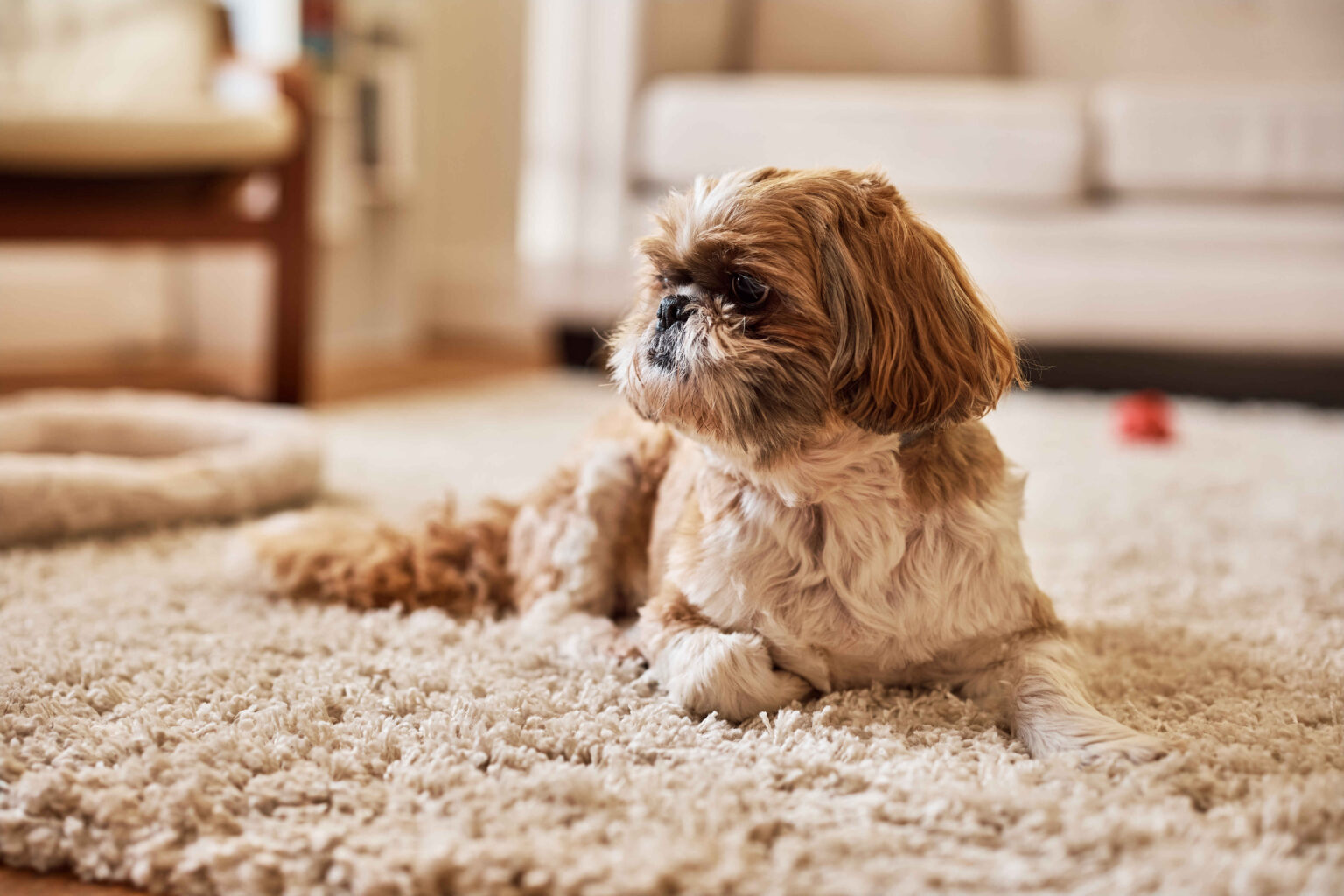
As pet owners, we know that our furry friends bring immeasurable joy, laughter, and unconditional love into our lives. However, we also know the reality of living with them: muddy paws after a rainstorm, the inevitable hairballs, midnight accidents, and the endless shedding. When it comes to home design, this reality often forces pet parents to tear out their cozy carpets in favor of cold, hard flooring.
- 1. Always Choose a “Cut-Pile” Over a “Loop-Pile”
- 2. Opt for a Low Pile Height
- 3. Prioritize High-Twist, Tight Weaves (Frieze Carpets)
- 4. Pick the Right Material: Triexta vs. Nylon
- 5. Rethink Your Colors: Go for Flecked Mid-Tones
- 6. The Secret Weapon: Moisture-Barrier Padding
- 7. Read the Fine Print on Pet Warranties
- Conclusion
- Frequently Asked Questions (FAQ)
- What is the absolute best carpet material for dogs and cats?
- How do I get old pet urine smells out of my carpet?
- Are Berber (loop) carpets safe for cats?
- Will a carpet shampooer ruin the stain resistance of my pet carpet?
- References
But you do not have to sacrifice comfort for cleanliness. You can absolutely enjoy the warmth and softness of a carpeted living room or bedroom while keeping your home looking and smelling fresh. The secret lies in choosing the best carpet for pets—one that is scientifically engineered to be durable, stain-resistant, and claw-friendly.
Not all carpets are created equal, and making the wrong choice can lead to trapped odors, unraveling fibers, and ruined subfloors. In this comprehensive guide, we will walk you through the seven expert tips you must know to select the ultimate pet-friendly carpeting for your home.
1. Always Choose a “Cut-Pile” Over a “Loop-Pile”
When shopping for carpets, you will quickly notice they generally fall into two structural categories: cut-pile and loop-pile (often called Berber). If you have cats or dogs, you must avoid loop-pile carpets at all costs.
Loop carpets are made of continuous strands of yarn woven in and out of the backing. While they look sleek and modern, they are a disaster waiting to happen in a pet household. A cat’s sharp claws or a dog’s unclipped nails can easily catch onto these loops. When they pull their paw away, they can snag the loop, unraveling entire rows of your beautiful new carpet in seconds. This is known as “zippering.”
Instead, choose a cut-pile carpet. In this style, the tops of the yarn loops are cut off, leaving individual strands standing straight up. There is nothing for your pet’s claws to snag on, making it vastly safer and more durable for a multi-pet home.
2. Opt for a Low Pile Height

Pile height refers to how tall the carpet fibers are. While a deep, fluffy, high-pile shag carpet might feel luxurious on your bare feet, it is a nightmare to maintain if you have pets.
High-pile carpets easily trap dirt, dander, and shed fur deep within their long fibers, making it nearly impossible for a standard vacuum to pull the debris out. Furthermore, if your pet has a liquid accident, long fibers absorb the mess much faster, allowing it to travel deeper into the carpet base.
A low-pile carpet is much smoother and flatter. The shorter fibers make it incredibly difficult for pet hair to become hopelessly embedded. A quick pass with a vacuum cleaner is usually all it takes to lift dirt and fur right off the surface. Additionally, low-pile carpets provide a much firmer, more stable surface for senior pets or pets with mobility issues (like arthritis) who might struggle to walk securely on slippery hard floors or deeply cushioned shag.
3. Prioritize High-Twist, Tight Weaves (Frieze Carpets)
Not only do you want short fibers, but you also want tightly twisted fibers. Carpet yarn is made by twisting strands of material together; the tighter the twist, the more durable the carpet.
Carpets with a tight weave—like a “Frieze” style carpet—are excellent for pet owners. Because the fibers are densely packed and tightly twisted together, they create a strong, resilient surface that bounces back easily from heavy foot (and paw) traffic. More importantly, a highly dense weave acts as a physical barrier. When your dog tracking in mud or has a urinary accident, the tight fibers temporarily hold the liquid on the surface, giving you precious extra minutes to blot it up before it seeps down into the vulnerable padding below.
4. Pick the Right Material: Triexta vs. Nylon

The material your carpet is made from will dictate how well it survives a pet household. Natural fibers like wool are gorgeous, but they are highly porous; they will absorb pet urine like a sponge and hold onto the odor forever. You absolutely must choose a synthetic fiber.
- Nylon: For decades, nylon was the gold standard. It is incredibly strong, resists crushing under heavy furniture, and holds up beautifully to high-energy dogs running around. However, nylon is not naturally stain-resistant; it must be treated with a chemical stain guard at the factory, which can wear off over time.
- Triexta (Sorona): This is the modern holy grail of pet-friendly carpeting. Triexta is a newer synthetic fiber that is naturally hydrophobic (it repels water). It does not absorb liquids, meaning stains cannot chemically bond with the fiber. Even dried-on pet vomit or urine can usually be cleaned perfectly with just warm water. If you have pets, look for carpets branded as “SmartStrand,” which are made of Triexta.
5. Rethink Your Colors: Go for Flecked Mid-Tones
A common piece of outdated advice is to “buy dark carpets to hide stains.” While a dark chocolate or navy carpet might hide a mud stain, it will highlight every single piece of light-colored pet hair, dander, and dust in your home. Conversely, a pure white or cream carpet will hide white pet hair but broadcast every muddy paw print.
The smartest choice for a pet owner is to choose a multi-tonal, heathered, or flecked mid-tone carpet. Carpets that weave two or three slightly different shades together (like a speckled grey or a textured beige) create an optical illusion that brilliantly camouflages both dark dirt and light pet hair between vacuuming sessions.
6. The Secret Weapon: Moisture-Barrier Padding

When choosing the best carpet for pets, most owners spend all their time looking at the top layer and completely ignore what goes underneath. The carpet padding is actually the most critical component for pet owners.
If your dog or cat pees on the carpet, the liquid travels downward. If it hits a standard sponge-rubber pad, the pad absorbs the urine. Once urine gets into the padding, it is almost impossible to extract. The bacteria will grow, and the smell will haunt your home, even if you clean the surface fibers perfectly.
You must specifically request a moisture-barrier pad (often called a “spill-guard” pad). These high-tech pads feature a waterproof top layer. If your pet has an accident, the liquid is blocked from soaking into the sponge. It stays pooled in the carpet fibers above, allowing your carpet cleaner to easily and entirely extract the mess.
7. Read the Fine Print on Pet Warranties
Carpet warranties can be incredibly confusing, but they are a lifesaver for pet parents. A warranty is a guarantee from the manufacturer that the carpet will perform as expected. However, when you have pets, you must read the fine print very carefully.
Many standard carpet warranties specifically exclude damage caused by “biological stains” (which is industry code for vomit, feces, and urine). You want to look for premium carpets that offer a specific “All Pet Warranty.” These specialized warranties guarantee that the carpet will resist stains from *all* domestic pets, including urine and vomit, for a set number of years. Purchasing a carpet with a robust pet warranty gives you massive peace of mind, knowing your investment is protected from inevitable accidents.
Conclusion
Choosing the right carpeting for a home with pets requires a strategic balance of durability, maintenance, and comfort. By avoiding loop piles, opting for short, tightly woven synthetic fibers like Triexta, choosing forgiving multi-tonal colors, and investing in a waterproof moisture-barrier pad, you are setting your home up for success. Taking the time to select the best carpet for pets ensures that you can enjoy the warmth of a carpeted home and the messy joy of your furry companions without constantly stressing over stains and snags.
Frequently Asked Questions (FAQ)
What is the absolute best carpet material for dogs and cats?
Currently, the best material for pet owners is Triexta (often sold under the brand name SmartStrand). It is incredibly soft, highly durable against heavy foot traffic, and most importantly, it is naturally hydrophobic. Because it does not absorb moisture, it is nearly impossible for pet urine or vomit to permanently stain the fibers. Nylon is a close second for durability but requires chemical stain treatments.
How do I get old pet urine smells out of my carpet?
If the urine has soaked through to the standard carpet padding, surface cleaning will not work. You must use an enzymatic cleaner specifically designed for pet urine. The enzymes physically break down the uric acid crystals that cause the lingering odor. Soak the affected area heavily with the enzymatic cleaner, allow it to sit for 15-20 minutes, and then use a wet-vac to extract the moisture. If the smell persists, the padding underneath may need to be replaced.
Are Berber (loop) carpets safe for cats?
No, Berber or loop-pile carpets are highly discouraged for homes with cats. Cats naturally love to scratch textured surfaces to stretch their muscles and shed the outer sheaths of their claws. The loops in a Berber carpet act perfectly like a scratching post. A cat’s claw can easily get caught in a loop and pull it, which can unravel an entire row of your carpet in one pull.
Will a carpet shampooer ruin the stain resistance of my pet carpet?
It depends on the carpet material and the shampoo used. If you have a nylon carpet treated with a topical stain guard, aggressive shampooing with harsh chemicals can eventually strip that protective coating away. If you use a carpet cleaner, always use a mild, manufacturer-approved solution. If you have a Triexta carpet, the stain resistance is built into the fiber itself and cannot be washed away.
References
- The Carpet and Rug Institute (CRI). Carpet Care & Pets. Carpet-Rug.org
- Mohawk Flooring. SmartStrand Pet-Friendly Carpet Guide. MohawkFlooring.com
- American Veterinary Medical Association (AVMA). Household Hazards for Pets. AVMA.org