
Bringing home a new puppy is an incredibly exciting, joyful, and exhausting experience all at once. Those tiny paws and happy tail wags can melt your heart in seconds, but as any seasoned pet parent will tell you, puppy potty training is usually the first real challenge you will face together. Accidents happen, sleep schedules get disrupted, and it can quickly feel like your puppy is learning absolutely everything except where they are supposed to go to the bathroom.
- The Biological Reality: Understanding Your Puppy’s Bladder
- When to Start Potty Training a Puppy
- 10 Expert Tips for Puppy Potty Training Success
- 1. Create a Strict, Unwavering Schedule
- 2. Pick a Designated Potty Spot
- 3. Reward Success Immediately with High-Value Treats
- 4. Master the “Pre-Potty” Signals
- 5. Try the “Umbilical Cord” Method
- 6. Use Crate Training Wisely
- 7. Master Nighttime Operations
- 8. Clean Accidents with Enzymatic Cleaners
- Common Potty Training Mistakes to Avoid
- How Long Does Puppy Potty Training Take?
- Conclusion
- Frequently Asked Questions (FAQ)
- Why does my puppy pee inside right after being outside?
- Should I wake my puppy up to go potty at night?
- Can I use a bell on the door for potty training?
- How do I know if an accident is a behavioral issue or a medical issue?
- References
The good news is that learning exactly how to potty train a puppy does not have to be a stressful, tear-inducing process. Dogs are naturally clean animals that prefer not to soil their living spaces. With consistency, patience, and the right strategic routine, your puppy can learn quickly and confidently.
In this comprehensive, beginner-friendly guide, we will walk you through the biological realities of a puppy’s bladder, the most effective vet-approved training tips, and how to troubleshoot the most common (and frustrating) potty training setbacks.
The Biological Reality: Understanding Your Puppy’s Bladder
Before you get frustrated with an indoor accident, it is critical to understand what your puppy is biologically capable of. Puppies are essentially canine toddlers; their bodies are still developing, and they simply do not have the physical muscle control to “hold it” for long periods.
According to experts at the American Kennel Club (AKC), a general rule of thumb is that a puppy can hold its bladder for one hour for every month of age, plus one.
This means a two-month-old puppy can hold it for an absolute maximum of three hours. However, this rule applies to a resting puppy. When a puppy is actively playing, running, or drinking water, that time frame shrinks dramatically to as little as 15 to 30 minutes! Setting realistic expectations based on your puppy’s age is the first step to preventing accidents.
When to Start Potty Training a Puppy
The absolute best time to start potty training is the exact moment your puppy’s paws cross the threshold of your home. Puppies learn best when routines are established early. Even very young, eight-week-old puppies can start understanding patterns, praise, and repetition.
You do not need to wait for your puppy to be older before teaching them where to potty. In fact, waiting too long often creates “bad” habits that are incredibly difficult to break later. The sooner your puppy learns the routine, the faster progress will happen.
10 Expert Tips for Puppy Potty Training Success
1. Create a Strict, Unwavering Schedule
One of the biggest secrets to potty training success is a rigid routine. A simple schedule helps your puppy understand when potty time happens. Take your puppy out at the exact same times every day so their digestive system begins to predict the routine. You should take your puppy out:
- Immediately after they wake up in the morning or from a nap
- Within 10 to 15 minutes after eating a meal or drinking heavily
- Immediately after a vigorous play session
- Right before bedtime
2. Pick a Designated Potty Spot
Choose one specific outdoor area for potty breaks and use it every single time. Dogs are heavily scent-driven creatures. The lingering smell of their previous bathroom breaks will help your puppy instantly connect that specific patch of grass with the act of going to the bathroom.
When you arrive at the spot, stay calm and stand relatively still. Do not turn potty time into playtime. Keep the experience boring so your puppy knows exactly why they are outside. If they don’t go within 5 minutes, calmly take them back inside, put them in their crate or hold them, and try again in 15 minutes.
3. Reward Success Immediately with High-Value Treats
Praise is powerful, but timing is everything. As soon as your puppy finishes going potty in the right place, you have a 3-second window to reward them. Treat them right there in the grass—do not wait until you get back inside the house, or they will think they are being rewarded for walking through the door! Use a highly enthusiastic voice and a “high-value” treat (like a tiny piece of boiled chicken or a specialized training treat) to make the reward unforgettable.
4. Master the “Pre-Potty” Signals
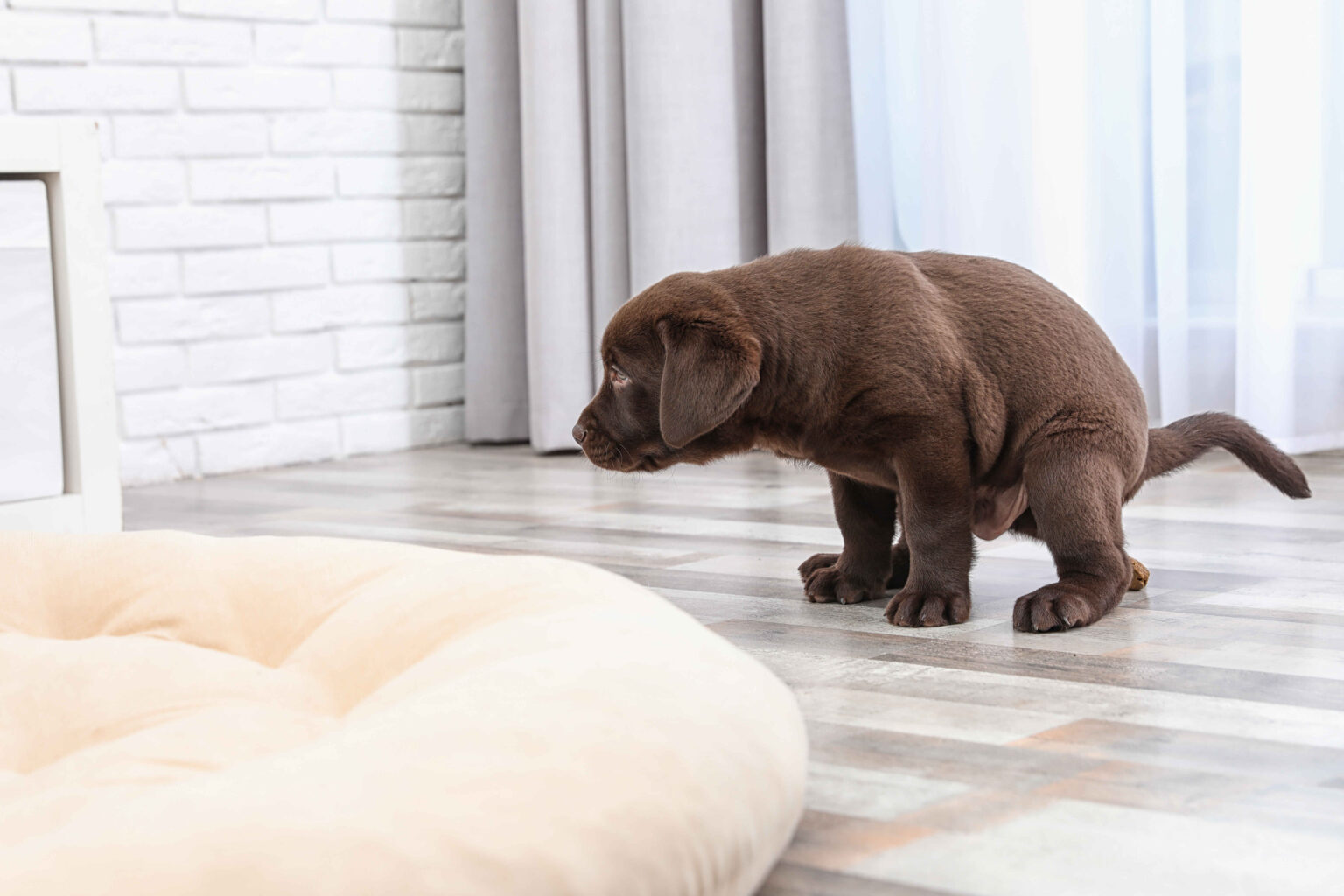
Most puppies give subtle clues right before they are about to lose control. Learning your puppy’s signals helps you prevent accidents before they happen. Watch closely for:
- Intense sniffing of the floor
- Walking in tight circles
- Sudden whining or pacing
- Heading toward the door or a quiet corner of the room
- Suddenly stopping in the middle of a play session
If you see any of these, immediately (but calmly) scoop the puppy up and take them to their outdoor spot.
5. Try the “Umbilical Cord” Method
Until your puppy is fully potty trained, indoor supervision is 100% essential. Puppies often have accidents when they wander into another room unsupervised. If you cannot keep your eyes glued to them, try the “Umbilical Cord” method: attach a 6-foot leash to your puppy and tie the other end to your belt loop. This keeps the puppy within your sight at all times, allowing you to catch their pre-potty signals instantly.
6. Use Crate Training Wisely
The ASPCA emphasizes that crate training is an incredibly valuable potty training tool because dogs possess a natural instinct not to soil the small den where they sleep. However, the crate must be sized correctly. It should only be large enough for the puppy to stand up, turn around, and lie down. If it is too big, the puppy will simply pee in one corner and sleep in the other.
Note: The crate should never be used as a punishment. It should always be a safe, comfortable place where your puppy goes to rest.
7. Master Nighttime Operations
You will inevitably have to take your puppy out in the middle of the night. When you do, keep the lights dim, do not use an excited voice, and do not play with them. Carry them to the potty spot, let them go, quietly praise them, and put them right back in the crate. You want them to learn that nighttime is strictly for sleeping and boring bathroom breaks.
8. Clean Accidents with Enzymatic Cleaners
Accidents are a normal part of the process. When they happen, stay calm and avoid yelling or punishing your puppy. Rubbing their nose in it or shouting only teaches them to fear you, which will lead them to hide behind the sofa to pee next time.
Instead, clean the area thoroughly with an enzymatic cleaner. Standard household soaps and vinegar only mask the smell to human noses. Dogs have millions of scent receptors and can still smell the uric acid crystals left behind. If the microscopic scent remains, your puppy will think that spot is an acceptable indoor bathroom. Enzymatic cleaners actually eat the bacteria and permanently destroy the scent.
Common Potty Training Mistakes to Avoid
Many beginner puppy owners make the same exact mistakes without realizing it, which drastically slows down the training process:
- Relying on Puppy Pee Pads: Unless you live in a high-rise apartment without elevator access, avoid pee pads. They teach a puppy that it is acceptable to pee indoors on soft, square surfaces (which makes your rugs look very appealing later).
- Expecting Instant Results: Potty training is a marathon, not a sprint. Small daily improvements matter more than perfection.
- Giving Too Much Freedom: Letting an un-trained puppy roam the entire house is a recipe for disaster. Restrict their access to one or two puppy-proofed rooms until they earn more freedom through good behavior.
How Long Does Puppy Potty Training Take?
As noted by VCA Animal Hospitals, there is no exact timeline because every puppy is wildly different. Age, breed size, personality, and your personal consistency all affect the process. Smaller breeds often take longer because their bladders are so tiny. Some puppies grasp the concept in a few weeks, while others need four to six months to be considered 100% reliably house-trained.
What matters most is steady progress. If your puppy is having fewer accidents and starting to head toward the door on their own, you are successfully moving in the right direction!
Conclusion
Potty training a puppy certainly takes time and dedication, but it does not have to be an overwhelming nightmare. By establishing a crystal-clear routine, utilizing close supervision, managing their crate properly, and showering them with positive reinforcement, your puppy will gradually learn where to go.
The most critical element is your consistency. Every successful outdoor potty break is a massive step toward a well-trained, confident adult dog. Start small, reward often, and remember that progress is still progress, even if it comes in tiny paw steps.
Frequently Asked Questions (FAQ)
Why does my puppy pee inside right after being outside?
This is incredibly common! The outside world is full of distracting smells, sounds, and leaves to chase. A puppy will often get so distracted by playing outside that they completely forget they need to pee. The moment they come back inside to the boring, quiet house, their body relaxes, and they realize their bladder is full. To fix this, keep outdoor potty breaks extremely boring—no playing until *after* they pee.
Should I wake my puppy up to go potty at night?
For the first few weeks, yes. A young puppy cannot hold their bladder through the entire night. Set an alarm to take them out once or twice a night before they wake up crying and have an accident in their crate. As they grow older and gain muscle control, you can slowly extend the time between nighttime breaks until they are sleeping through the night.
Can I use a bell on the door for potty training?
Yes, “bell training” is highly effective! Hang a set of bells from the doorknob. Every single time you take your puppy outside to potty, gently take their paw and ring the bell, then immediately open the door. With enough repetition, your puppy will learn to ring the bells themselves to alert you that they need to go outside.
How do I know if an accident is a behavioral issue or a medical issue?
If your puppy was making great progress but suddenly starts having frequent accidents inside, or if they are squatting to pee multiple times an hour but only producing a few drops, contact your veterinarian. This is a classic symptom of a Urinary Tract Infection (UTI). A quick round of antibiotics will solve the medical issue so you can get back to training.
References
- American Kennel Club (AKC). How to Potty Train a Puppy: A Comprehensive Guide for Success. AKC.org
- Veterinary Centers of America (VCA). House Training Your Puppy. VCAHospitals.com
- ASPCA. House Training Your Puppy. ASPCA.org