

If you are constantly asking yourself, why does my cat have bad breath, you are certainly not alone. How many times has your cat come to gently wake you up in the morning by purring and rubbing their soft face against yours?
- Is Bad Breath Normal in Cats?
- Why Does My Cat Have Bad Breath?
- When Bad Breath May Signal a Serious Health Problem
- Cat Breath Smell Diagnosis Table
- Understanding Kidney Disease and Bad Breath in Cats
- Diabetes Bad Breath in Cats
- When to See a Vet About Your Cat’s Breath (Urgent Checklist)
- How to Fix and Prevent Bad Breath in Cats
- 1. Schedule a Professional Veterinary Dental Cleaning
- 2. Learn How to Brush Cat Teeth
- 3. Utilize VOHC-Approved Dental Treats
- 4. Incorporate Water Additives and Oral Probiotics
- Conclusion
- Frequently Asked Questions (FAQ)
- Is bad breath normal for an older cat?
- Can I use human toothpaste to brush my cat’s teeth?
- Does wet food cause bad breath more than dry food?
- Why does my young kitten have bad breath?
- Do dental water additives actually work for cats?
- References & Further Reading
It is one of the most adorable and loving behaviors a feline can show. However, if the odor wafting from their mouth is strong enough to make your eyes water, that morning affection can quickly become less than welcome.
Of course, you want to know how to fix cat bad breath immediately. But before you start looking into kitty breath mints, you might need to make an appointment with your veterinarian.
While temporary, post-tuna halitosis is absolutely no cause for concern, your cat’s breath should not stink consistently. Chronic bad breath in cats, medically known as cat halitosis, is rarely just a cosmetic issue.
In fact, an unrelenting, foul odor is usually your cat’s body sounding an alarm about an undetected, underlying health issue. In this comprehensive guide, we will decode the specific smells coming from your cat’s mouth, explore the hidden medical causes, and provide vet-approved solutions to fix the problem for good.
Is Bad Breath Normal in Cats?
Many pet owners assume that stinky breath is just a standard part of owning a pet. So, is bad breath normal in cats? The short answer is no.
It is perfectly normal for your cat’s breath to smell mildly of the fish or poultry they just finished eating. However, that lingering food smell should dissipate relatively quickly.
If you are constantly wondering why your cat’s breath smells bad enough to clear a room, it is time to take action. If the odor is overwhelmingly sour, metallic, or chemical, it has crossed the line from a normal biological quirk into clinical halitosis.
Why Does My Cat Have Bad Breath?
When trying to figure out exactly why does my cat have bad breath, the mouth is the very first place you should look. Dental disease in cats is the undisputed leading cause of foul breath.
According to extensive feline health research published by the Cornell University College of Veterinary Medicine, between 50 and 90 percent of cats older than four years of age suffer from some form of dental disease.
You are likely smelling the toxic byproducts of destructive oral bacteria. As these bacteria feed on leftover food particles, they form a sticky film called plaque.
If not brushed away, this plaque hardens into concrete-like tartar, pushing deep beneath the gumline. This leads to severe gingivitis in cats, which is a painful inflammation of the gums.
Eventually, this progresses into advanced periodontal disease, where the bone holding the teeth actually begins to rot away. Another excruciatingly painful condition, called Feline Stomatitis, causes massive, fiery-red inflammation of the entire mouth, leading to incredibly foul breath and drooling.
When Bad Breath May Signal a Serious Health Problem
Veterinarians frequently use their sense of smell as an initial diagnostic tool. The specific type of odor wafting from your cat’s mouth can point directly to different systemic diseases affecting their internal organs.
Cat Breath Smell Diagnosis Table
Use this quick reference guide to help decode exactly what your cat’s breath might be trying to tell you:
| If the Breath Smells Like… | Potential Underlying Cause | What is Happening? |
|---|---|---|
| Rotten Meat, Fish, or Garbage | Dental Disease or Trapped Object | Bacteria are decaying the gum tissue or rotting a piece of food trapped between the teeth. |
| Urine or Ammonia | Chronic Kidney Disease (CKD) | Failing kidneys cannot filter toxins. Urea builds up in the blood and is exhaled through the lungs. |
| Sweet, Fruity, or Nail Polish Remover | Diabetic Ketoacidosis | Untreated diabetes causes the body to aggressively burn fat for energy, producing sweet-smelling ketones. |
| Bile, Vomit, or Feces | Liver Disease or Bowel Obstruction | A blocked intestine or failing liver is causing toxic, foul odors to travel back up the esophagus. |
Understanding Kidney Disease and Bad Breath in Cats
If you ever wonder why does my cat have bad breath that smells like ammonia, it is a severe warning sign. The kidneys act as the body’s filtration system.
When they begin to fail, toxic waste products like urea build up in the bloodstream. The cat’s body attempts to eliminate this excess urea through the respiratory system, resulting in breath that smells strongly of urine.
Diabetes Bad Breath in Cats
A sweet or fruity smell is an indicator of Feline Diabetes. More specifically, it points to a dangerous, life-threatening complication called diabetic ketoacidosis.
When a diabetic cat’s body cannot properly use insulin to absorb blood sugar, it begins rapidly breaking down fat for energy. This produces acidic byproducts called ketones, which have a distinctly sweet, chemical scent when exhaled.
When to See a Vet About Your Cat’s Breath (Urgent Checklist)
Knowing when bad breath means an immediate vet visit can save your cat from agonizing pain. You should schedule an urgent veterinary examination if their bad breath is accompanied by any of the following symptoms:
- Excessive Drooling: Especially if the drool is thick, ropy, or tinged with blood.
- Pawing at the Mouth: Showing clear distress or rubbing their face aggressively against furniture.
- Dropping Food: Approaching the food bowl hungry, picking up kibble, and then dropping it because it hurts too much to chew.
- Excessive Thirst and Urination: Flooding the litter box and constantly drinking water are classic signs of both kidney disease and diabetes.
- Sudden Weight Loss: Losing weight rapidly despite eating normally, or refusing to eat altogether.
How to Fix and Prevent Bad Breath in Cats

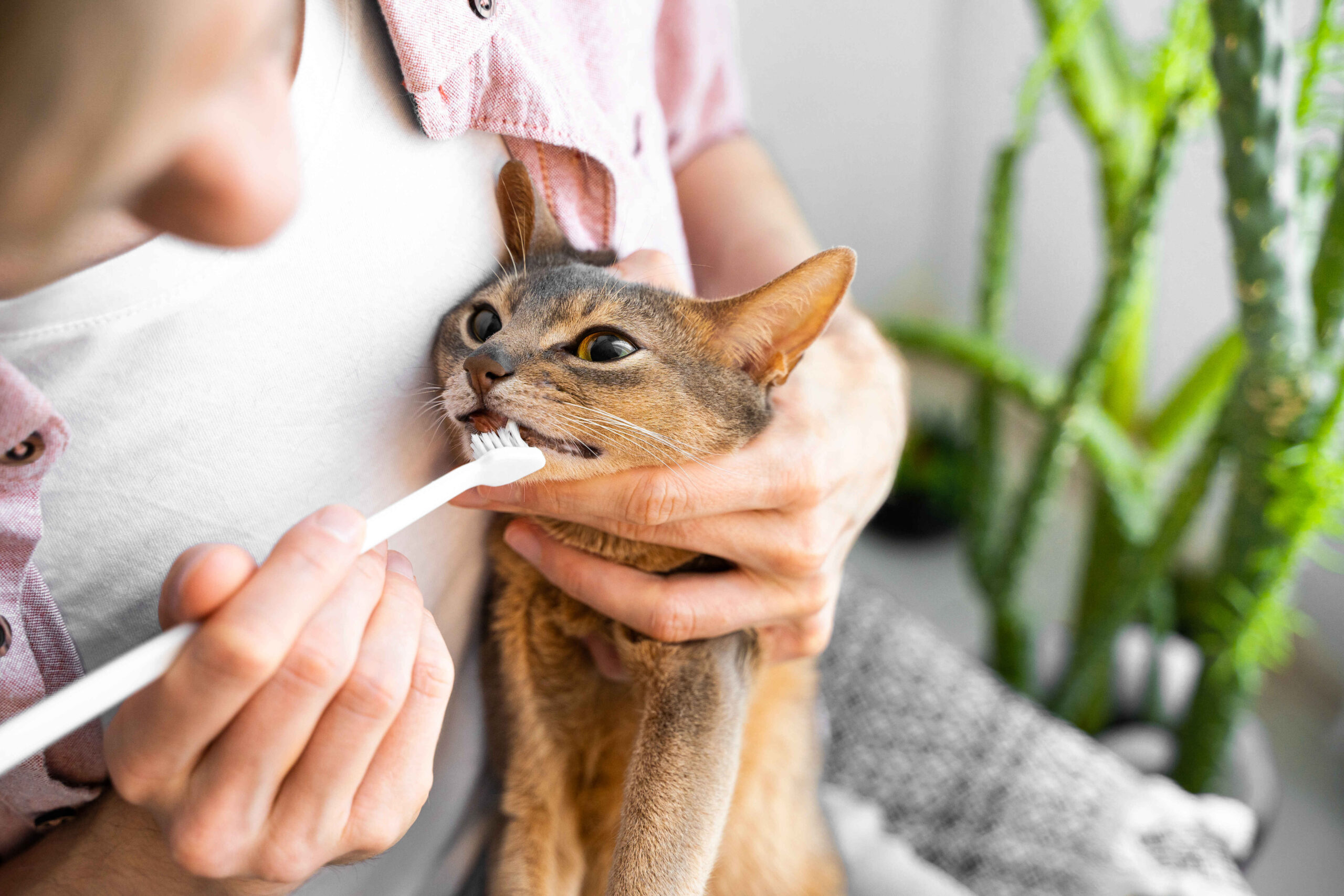
Knowing exactly why does my cat have bad breath determines your ultimate treatment plan. Once your veterinarian has ruled out serious systemic diseases, the focus will turn directly to their oral hygiene.
1. Schedule a Professional Veterinary Dental Cleaning
If your cat has already established heavy tartar and bleeding gums, no amount of at-home brushing will fix the problem. The only way to remove hardened calculus from beneath the gumline is through a professional veterinary dental scaling.
This deep cleaning and polishing must be done under general anesthesia. Often, simply extracting one hidden, rotting tooth completely cures a cat’s bad breath overnight.
2. Learn How to Brush Cat Teeth
Once their mouth is professionally cleaned, daily brushing is the absolute gold standard for preventative care. As emphasized by the American Veterinary Medical Association (AVMA), establishing a consistent at-home brushing routine is vital.
Start by simply dipping your finger in tuna water and gently rubbing it along their outer gums for a few seconds. Once they calmly accept your finger, introduce a soft, silicone finger-brush. Always use an enzymatic pet toothpaste, as human toothpaste is highly toxic to felines.
3. Utilize VOHC-Approved Dental Treats
If daily brushing is absolutely impossible due to behavioral issues, dietary interventions can step in to help. When shopping for dental treats, look exclusively for products carrying the seal from the Veterinary Oral Health Council (VOHC).
These specific kibbles and treats are mechanically engineered to be larger and highly fibrous. Instead of shattering immediately, the kibble holds its shape and physically scrapes the plaque off the tooth surface.
4. Incorporate Water Additives and Oral Probiotics
Water additives are odorless, tasteless liquids added directly to your cat’s water bowl. They contain specialized enzymes that actively break down plaque-forming bacteria.
Additionally, sprinkling flavorless oral probiotics onto your cat’s wet food floods their mouth with beneficial bacteria. This actively crowds out and starves the harmful, sulfur-producing bacteria that cause foul odors.
Conclusion
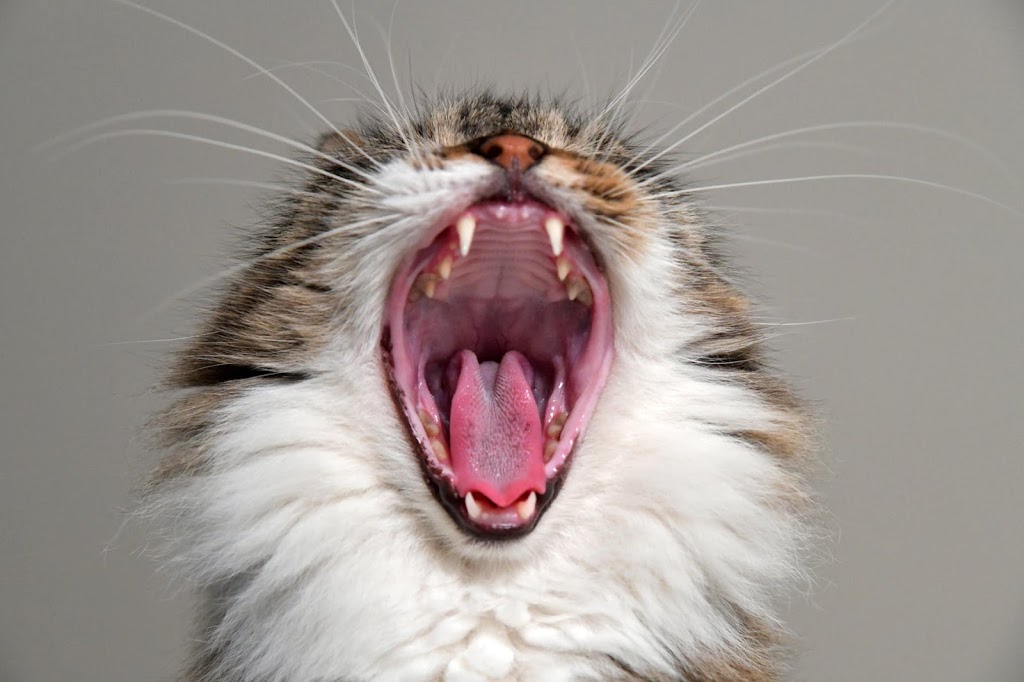
While a yawn that smells faintly of salmon is nothing to worry about, chronic cat halitosis is a clear biological signal that something is wrong. By understanding why does my cat have bad breath, you can provide your veterinarian with critical diagnostic clues.
Pay close attention to whether the odor smells like rotting garbage, sweet fruit, or ammonia. Through professional veterinary dental care, a diligent at-home brushing routine, and VOHC-approved treats, you can protect your cat’s internal organs and save their teeth. Soon, you will get back to enjoying those morning cuddles with fresh, clean breath.
Frequently Asked Questions (FAQ)
Is bad breath normal for an older cat?
No, bad breath is not simply a “normal” part of aging. While senior cats are significantly more likely to develop the conditions that cause bad breath, the odor itself is still a symptom of an untreated medical issue that requires veterinary care.
Can I use human toothpaste to brush my cat’s teeth?
Absolutely not. Human toothpaste is incredibly dangerous for cats. It contains high levels of fluoride, which is toxic if swallowed, and cats cannot spit it out. Always use an enzymatic toothpaste specifically formulated for felines.
Does wet food cause bad breath more than dry food?
There is a persistent myth that dry kibble “cleans” a cat’s teeth while wet food rots them. In reality, standard dry kibble shatters instantly upon chewing and leaves a sticky, starchy residue along the gumline. The true cause of bad breath is the lack of a daily brushing routine, regardless of the diet.
Why does my young kitten have bad breath?
If your kitten is between 3 and 6 months old and suddenly develops metallic or slightly foul-smelling breath, they are very likely teething. As sharp baby teeth fall out, mild localized inflammation and tiny amounts of bleeding occur, causing a temporary bad odor.
Do dental water additives actually work for cats?
Yes, they can be a highly helpful preventative tool, provided you purchase a high-quality product with the VOHC seal of approval. While they do not replace the mechanical scraping action of physical brushing, they do contain enzymes that help prevent new plaque from sticking to the teeth.